
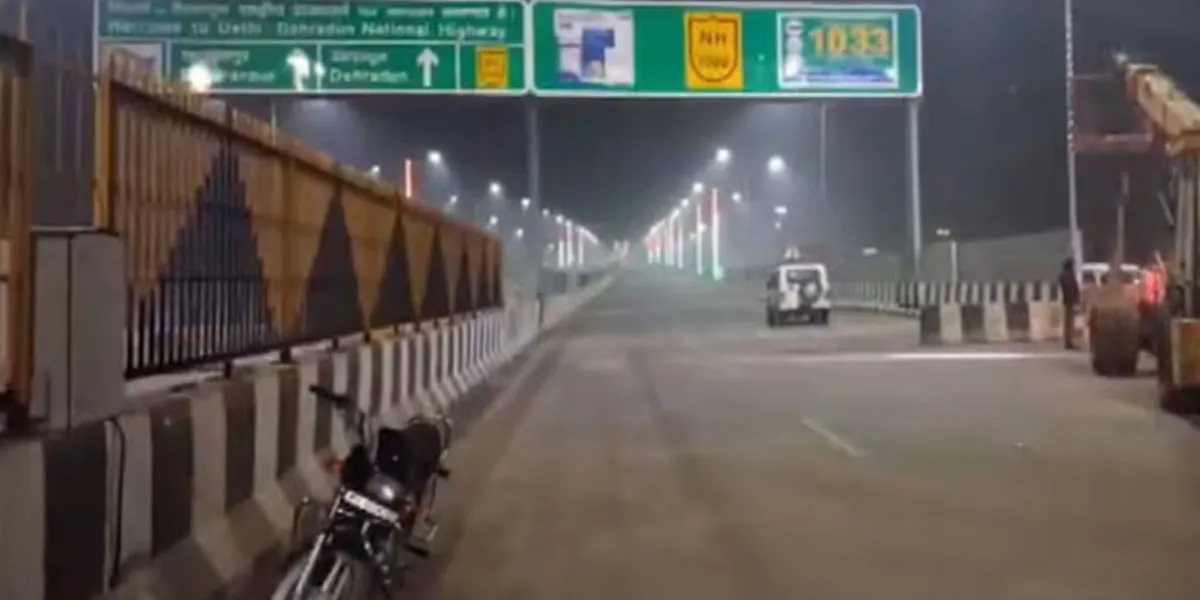
Spanning approximately 210 kilometres, the six-lane expressway starts near Delhi’s Akshardham Metro Station and links seamlessly with the Delhi–Meerut Expressway. It passes through key districts of Uttar Pradesh, including Baghpat, Baraut, Shamli and Saharanpur, before terminating at Dehradun, the state capital of Uttarakhand. Prime Minister Narendra Modi laid the foundation stone for the project on December 4, 2021.
Built at an estimated cost ranging between Rs 118.7 billion and Rs 130 billion, the expressway is designed to significantly reduce fuel consumption, travel fatigue and congestion while offering a smoother and more scenic driving experience. Although the official inauguration date is yet to be announced, trial runs are already under way, with barriers lifted in areas such as Geeta Colony and vehicles permitted on select stretches.
The expressway features modern infrastructure, including multiple underpasses, overbridges, service roads and interchanges. While it has been developed as a six-lane corridor, provisions have been made for future expansion to eight lanes as traffic volumes increase.
One of the most distinctive elements of the project is a 12-kilometre elevated wildlife corridor passing through forested stretches near Rajaji National Park and the Shivalik reserve. This environmentally sensitive section has been designed to minimise disruption to wildlife by allowing animals to move freely beneath the elevated roadway.
The project is being executed in four phases. The first phase, stretching from Akshardham through Geeta Colony, Shastri Park, Mandola Vihar and Khekra in Baghpat, has been ready for over six months and was even used by commuters during Delhi’s floods in September after barricades were temporarily removed. The second phase, from Baghpat to Saharanpur, is nearing completion, while the third phase involves widening the existing route between Ganeshpur and the Saharanpur Bypass and is at an advanced stage.
The fourth and final phase, which includes elevated sections and tunnels near Dehradun, is currently undergoing safety checks and finishing work. Once completed, the new corridor between Baghpat and Saharanpur is expected to transform travel for commuters accustomed to navigating congested routes via Meerut, Muzaffarnagar and Roorkee.
Officials said the expressway will significantly boost connectivity for tourists heading to Uttarakhand’s hill stations and pilgrimage centres, while also easing daily travel for regular commuters. As per recent official estimates, the corridor is likely to open to the public by February 2026. Authorities added that the Prime Minister’s Office has directed the Ministry of Road Transport and Highways to inaugurate the project only after all four phases are fully completed and operational.
