
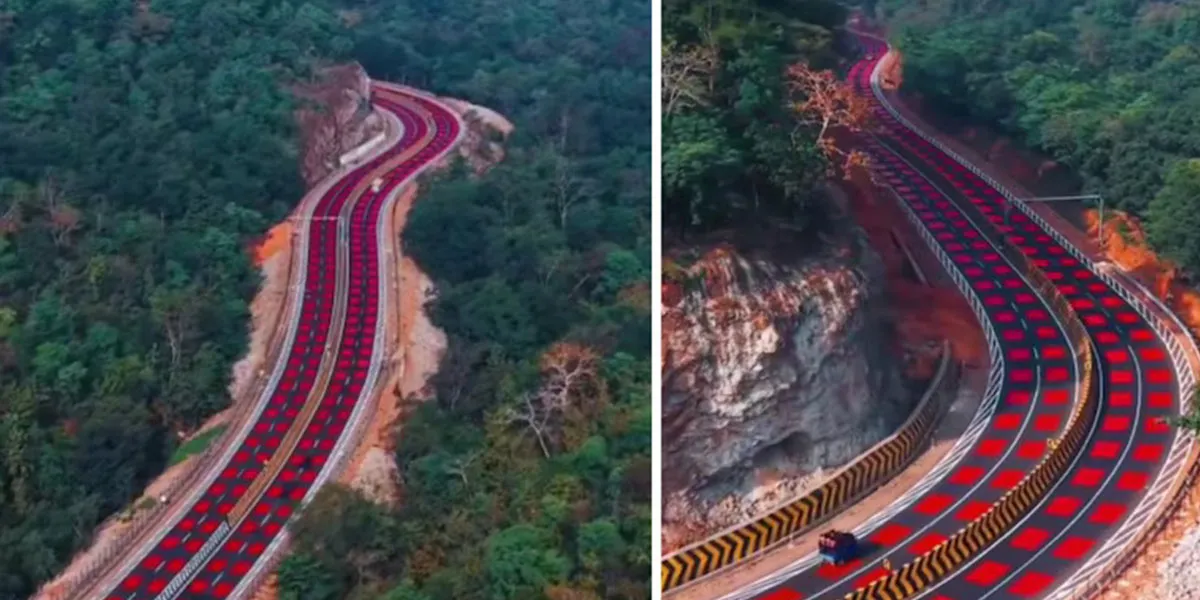
The Madhya Pradesh government highlighted the initiative on social media, describing wildlife protection as a “sacred duty”. The red table-top markings are designed to slow down vehicles and reduce animal–vehicle collisions within the tiger reserve.
The wildlife-safe stretch is located on the 11.96 km Hiran–Sindoor section of NH-45, which connects Bhopal and Jabalpur. Situated around 60 km from Jabalpur, the highway cuts through dense forest areas where animals frequently cross the road. The region is home to tigers, deer, jackals, sambar and other species, making collisions a recurring concern despite existing safeguards.
Unlike conventional speed breakers, the new design features slightly raised, red-coloured chequered markings across the road surface, creating a tabletop effect that encourages drivers to slow down gradually. The red colour was chosen for its high visibility compared with traditional white or yellow markings. Authorities said the strong visual contrast and textured surface serve as an early warning for motorists entering wildlife-heavy zones. Almost the entire 12 km forest stretch has been covered with these markings.
In addition to the road markings, NHAI has constructed 25 wildlife underpasses along the highway to allow animals to move freely beneath the road. An eight-foot-high iron fence has also been installed on both sides. However, officials said certain locations remained accident-prone, prompting the need for additional traffic-calming measures.
The project forms part of NHAI’s Green Highways programme, aligned with the Ministry of Road Transport and Highways’ Green Highways Policy of 2015. While comprehensive national data on animal–vehicle collisions is limited, available figures underline the urgency of such interventions. In Punjab, animal collisions account for about 53 per cent of fatalities linked to such accidents, while Madhya Pradesh has recorded 237 animal–vehicle collisions and 94 deaths over the past two years.
NHAI official Amritlal Sahu said the work is currently underway and will be expanded further. He noted that the red markings have been introduced to clearly demarcate dangerous zones and encourage motorists to drive slowly, reducing risk to both people and wildlife.
Built at a cost of around Rs 1.22 billion, the highway project is expected to be fully completed in 2025. Officials said the upgraded road could also support tourism and local economic activity following the reclassification of nearby wildlife zones. If successful, similar eco-sensitive road designs may be implemented on other national highways passing through forest and wildlife corridors across India.