
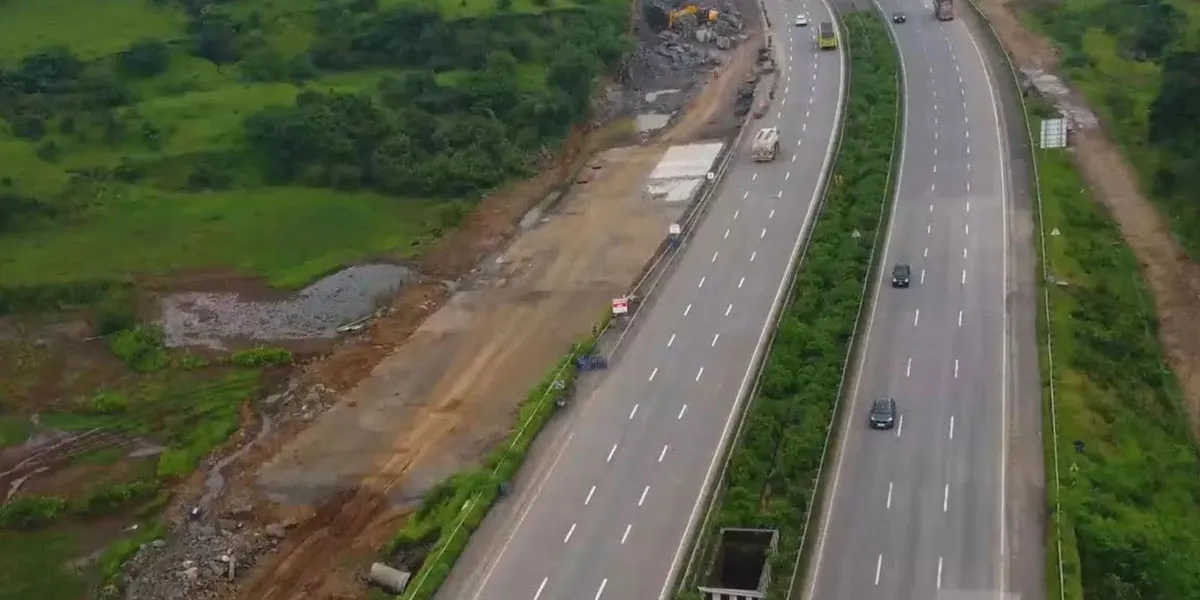
A senior MSRDC official said the project faced significant engineering challenges due to its alignment through hilly terrain and across a deep valley. The route cuts across the Western Ghats and includes two tunnels measuring 8.9 km and 1.7 km, along with two cable-stayed bridges of 840 metres and 650 metres. With the completion of the viaduct connecting the two tunnels, only minor finishing works remain before commissioning. Lane widening towards Khopoli has also been completed to manage higher traffic volumes once the bypass opens.
The existing section of the Mumbai–Pune Expressway between the Khopoli exit and Sinhgad Institute at Kusgaon spans 19.8 km and passes through Lonavala, a stretch that often witnesses severe congestion due to narrow lanes and heavy tourist inflows. The missing link will reduce this distance to 13.3 km, creating a non-stop bypass around Lonavala.
Once operational, the new alignment is expected to bring down Mumbai–Pune travel time by nearly half an hour. Currently, the journey can take over 3.5 hours during peak congestion, though it typically averages around three hours. With the missing link in place, the travel time is expected to reduce further to about 2.5 hours, especially when combined with the time savings offered by the Atal Setu.
The project will also shorten the distance between Mumbai and Pune by more than 6 km, helping save fuel and reduce emissions. MSRDC said the tunnels, which are 23.3 metres wide, feature four traffic lanes and an emergency lane, making them among the widest in Asia. The 650-metre bridge is also one of the tallest in the country.
The project, estimated at Rs 65.95 billion, began in 2019 and was originally slated for completion in 2022. However, execution was delayed due to the Covid-19 pandemic, difficult geological conditions and heavy monsoon rains. According to MSRDC, the revised deadline of March 2026 is now expected to be met.