
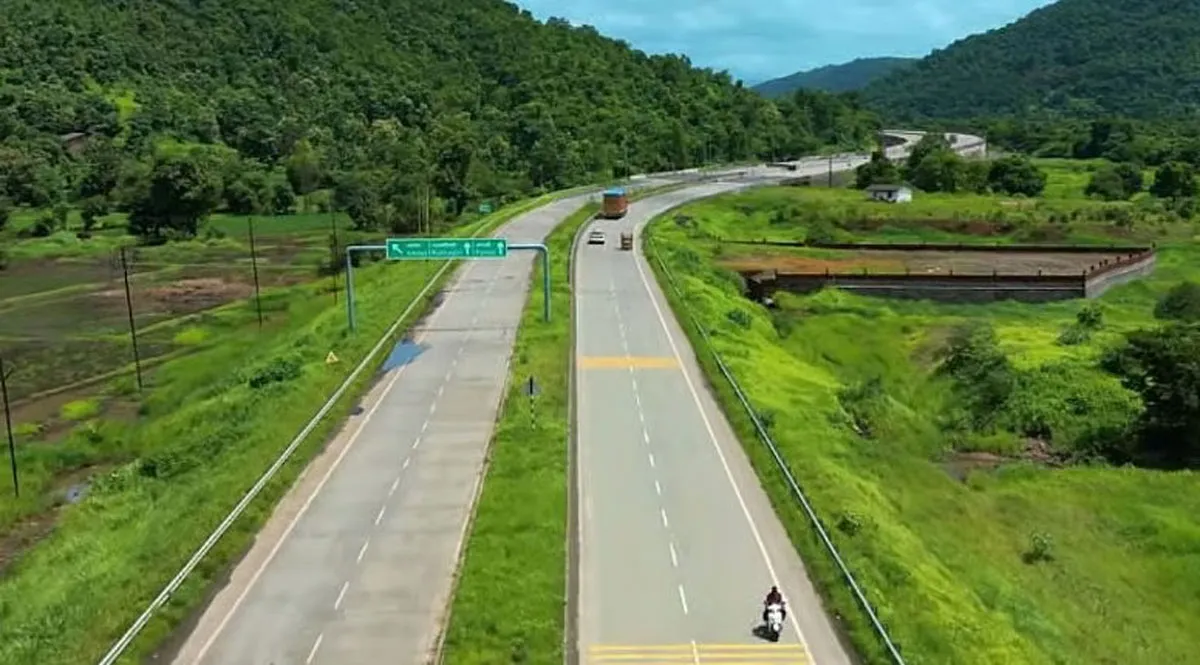
According to officials, the Panvel–Kasu and Indapur section, spanning about 84 km and executed by the National Highways Authority of India, is largely complete and offers relatively smooth driving conditions. However, the most severe congestion persists beyond Indapur, where traffic frequently slows to a crawl.
The Indapur–Zarap stretch of nearly 470 km is being handled directly by the Ministry of Road Transport and Highways. The biggest bottlenecks along this corridor are the 3-km Indapur bypass and the 7-km Mangaon bypass. Although both were part of the original contract, they remained incomplete for years, prompting the ministry to issue fresh tenders earlier this year. While work has restarted, officials said the bypasses are unlikely to be completed before March 2027.
Motorists passing through Indapur and Mangaon continue to experience heavy congestion, particularly during peak hours. Despite temporary widening measures, traffic congestion remains severe as local and through traffic converge within town limits, resulting in long queues and delays.
Beyond Mangaon, road conditions improve considerably, with work from Parshuram Ghat to Zarap almost complete. However, slow progress on four flyovers near Lanja, Nivali, Pali and Sangameshwar—each around 800 metres long—has caused disruptions for nearly two years. These flyovers are now expected to open only by March 2026.
Officials said congestion is largely confined to active construction zones and that service roads have been created around flyover sites to maintain traffic flow.
The issue drew wider attention after engineer Chaitanya Patil undertook a 29-day march covering the full 470-km stretch to highlight safety gaps and infrastructure deficiencies. His findings have been submitted to Union minister Nitin Gadkari for further action.