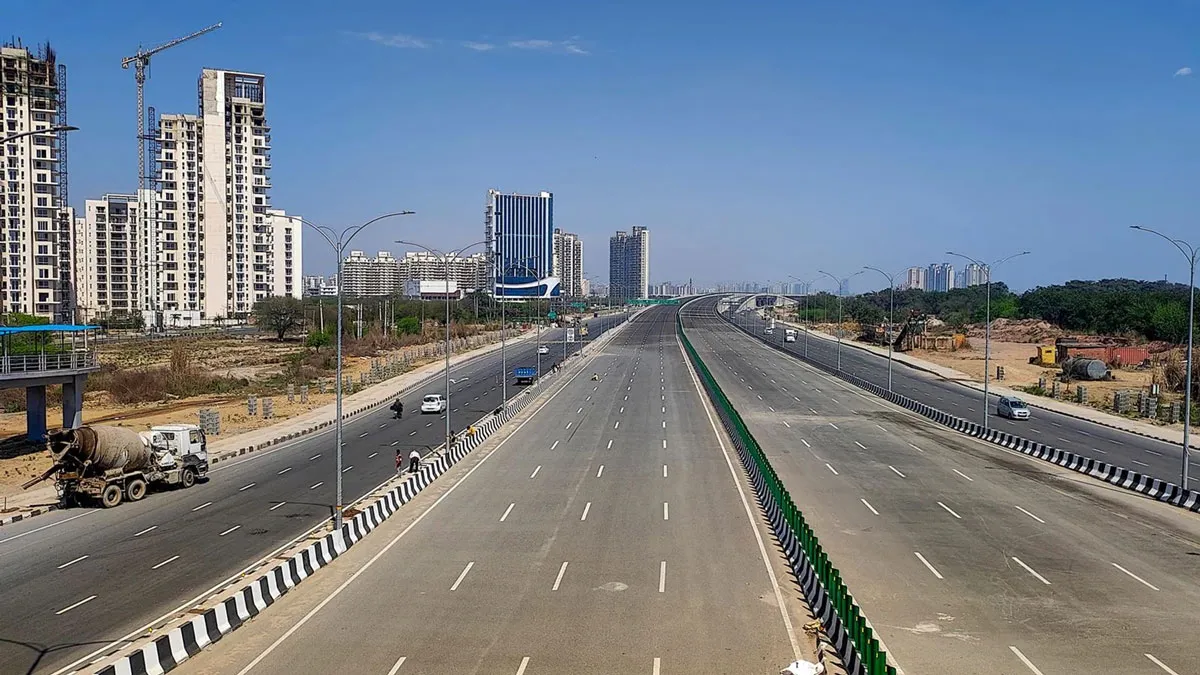
In letters dated January 14 and 17, the Dwarka Expressway–Gurugram Development Association (DXP-GDA) pointed out that bus services are infrequent on routes linking Gurugram with major metro nodes in Dwarka, including Sector 21 and Yashobhoomi (India International Convention and Expo Centre) stations. The association noted that despite rapid growth in residential, commercial, educational and healthcare infrastructure along the corridor, last-mile and intercity public transport options remain insufficient.
The residents argued that the lack of scheduled bus services has led to severe congestion on service roads and arterial junctions, longer travel times, higher emissions and worsening air quality. They also said commuters are disproportionately affected during traffic restrictions and pollution-control measures. According to the association, the Dwarka Expressway was conceived as a high-capacity urban corridor, but without a robust bus network integrated with the metro system, its potential for sustainable mobility cannot be fully realised.
In a separate letter addressed to Gurugram Member of Parliament Rao Inderjit Singh, residents highlighted rising commuting costs following the introduction of toll charges on the expressway. They said cab fares to Dwarka have increased sharply and that even school buses face monthly toll expenses, which are ultimately borne by residents. The association also recalled earlier assurances of electric bus services along the corridor, which have yet to materialise.
The issue has also underscored broader public transport challenges in western Gurugram. Residents said reaching the nearest metro station often requires multiple modes of informal transport, reflecting persistent gaps in last-mile connectivity.
The Gurugram Metropolitan City Bus Limited, under the Gurugram Metropolitan Development Authority, currently operates around 150 buses across the city. The agency has announced plans to add 200 electric buses and recently signed a memorandum of understanding with Plaksha University, in coordination with Street Surge, to support a bus route optimisation project. Earlier, officials were directed to identify new routes to expand coverage and improve last-mile connectivity.
The residents’ demands highlight the urgent need for integrated, reliable and sustainable public transport solutions in one of Gurugram’s fastest-growing urban corridors.