Responding to the criticism, the Mumbai Metropolitan Region Development Authority said the flyover’s design follows a phased and carefully planned engineering approach. The controversy emerged after a post by the Gems of Mira Bhayander account on X questioned whether the double-decker flyover, developed as part of the Metro Line 9 corridor, could worsen congestion rather than ease it.
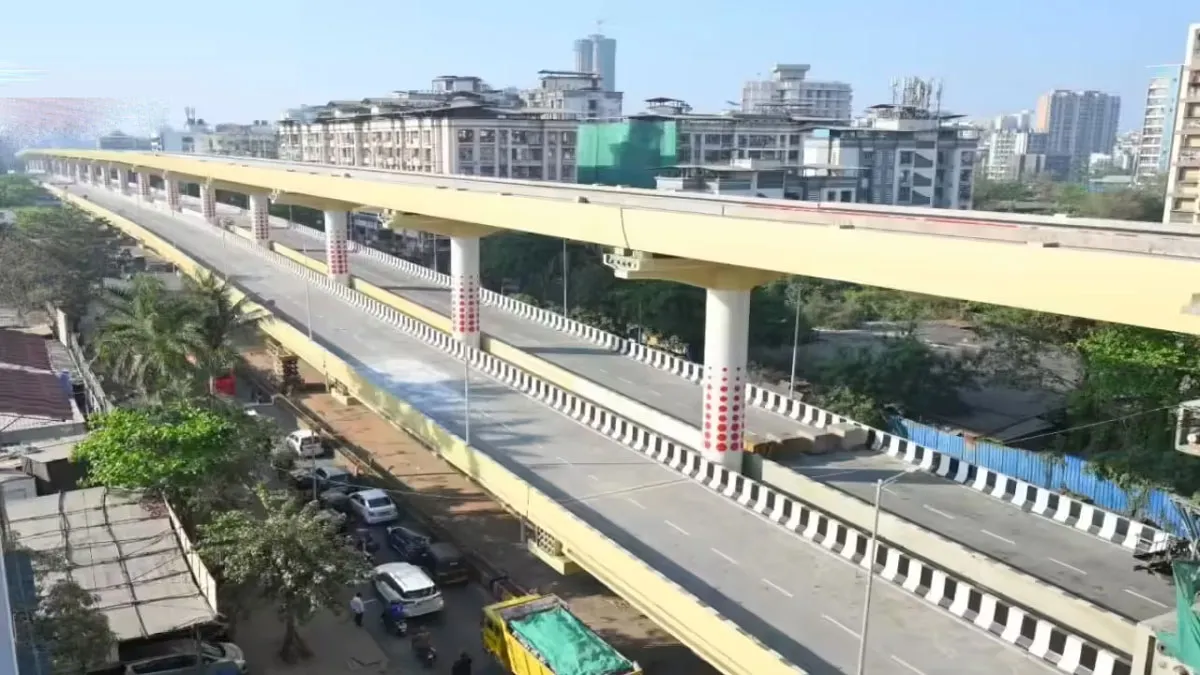
The post alleged that the flyover abruptly narrows from four lanes to two, prompting fears of increased congestion and accident risks. However, MMRDA clarified that the lane transition is intentional and has been dictated by land availability as well as future expansion plans.
According to the authority, the flyover has currently been designed with two lanes towards Bhayander East, while space has been earmarked for two additional lanes towards Bhayander West in a later phase. This future expansion will extend across the Western Railway line. Officials explained that as the Bhayander East arm comes first along the alignment, the existing four-lane configuration tapers into two lanes at this stage.
Up to Golden Nest Circle, a major junction where five key roads converge, a 2+2 lane flyover has been provided. This section has been integrated with the Metro corridor and supported by slip roads to enable smoother traffic dispersal. Beyond this junction, towards Bhayander East, the road width reduces in line with the Development Plan, resulting in a 1+1 lane flyover along the median, with dedicated entry and exit ramps connecting to Railway Phatak Road.
MMRDA added that provisions have been made for future widening of the flyover, subject to approvals and coordination with the Mira-Bhayander Municipal Corporation. Despite the clarification, criticism has continued on social media, with several users warning that the flyover could become accident-prone if opened in its current configuration and may require significant modifications soon after inauguration.