
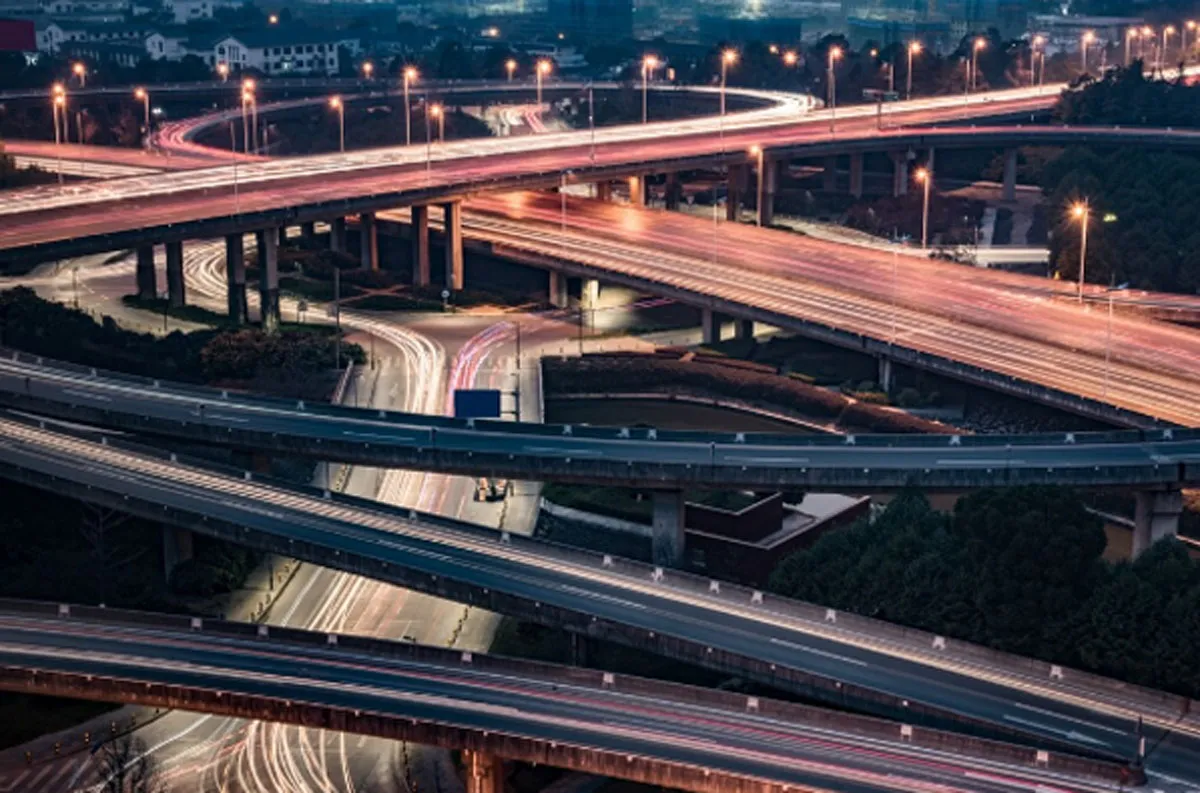
Operational access controlled National High Speed Corridors and expressways have risen from 93 km in 2014 to 3,052 km at present, while the length of four-lane and above highways has increased by 2.6 times from 18,371 km to 48,568 km. The share of less than two-lane highways has fallen from 30 per cent in 2014 to nine per cent of the total network, improving connectivity for urban, rural and industrial regions and enhancing logistics efficiency.
A study by the Indian Institute of Management, Bangalore found that every one-rupee expenditure in national highway development leads to a Rs three point two increase in Gross Domestic Product (GDP). The study also reported a nine point nineteen per cent reduction in transport time between factories and suppliers, a four point ninety three per cent reduction between factories and customers, and a 16.6 per cent reduction in time to access schools. Reductions of nine per cent in time to access health services and seven per cent in time to reach mandis were noted, while the average number of mandis accessed increased by eight per cent.
An estimation by the Indian Institute of Technology, Kanpur indicated that construction of one lane-km of national highway generates 4,478 person-days of direct employment and 5,297 person-days of indirect employment, with an induced effect of 52,393 person-days per lane-km over a period of seven years. The government constructed 57,125 km of national highways in the last five years with average construction of 34,215 lane-km per year, yielding average annual employment generation of about 330 million (mn) person-days including direct and indirect employment.
The government has targeted operationalising 18,000 km of access controlled National HSCs and expressways by 2028-29 and aims to award 26,000 km by 2032-33, alongside priority development of ring roads, city bypasses for urban centres with populations above 0.5 million (mn), port links and connectivity to industrial nodes. The ministry emphasised that last-mile connectivity to agricultural centres, schools and health care facilities remains the responsibility of state governments, and the information was provided in a written reply to the Rajya Sabha.