
A Centre of Excellence for Road Safety will be set up at the Indian Institute of Technology Madras (IIT Madras) to promote best practices and strengthen collaboration between academic institutions, industry and policymakers. The centre will focus on research, training and the dissemination of standards that support safer design and operations. Its long-term vision includes halving fatalities by 2030 and working towards zero deaths by 2040 as part of a phased approach.
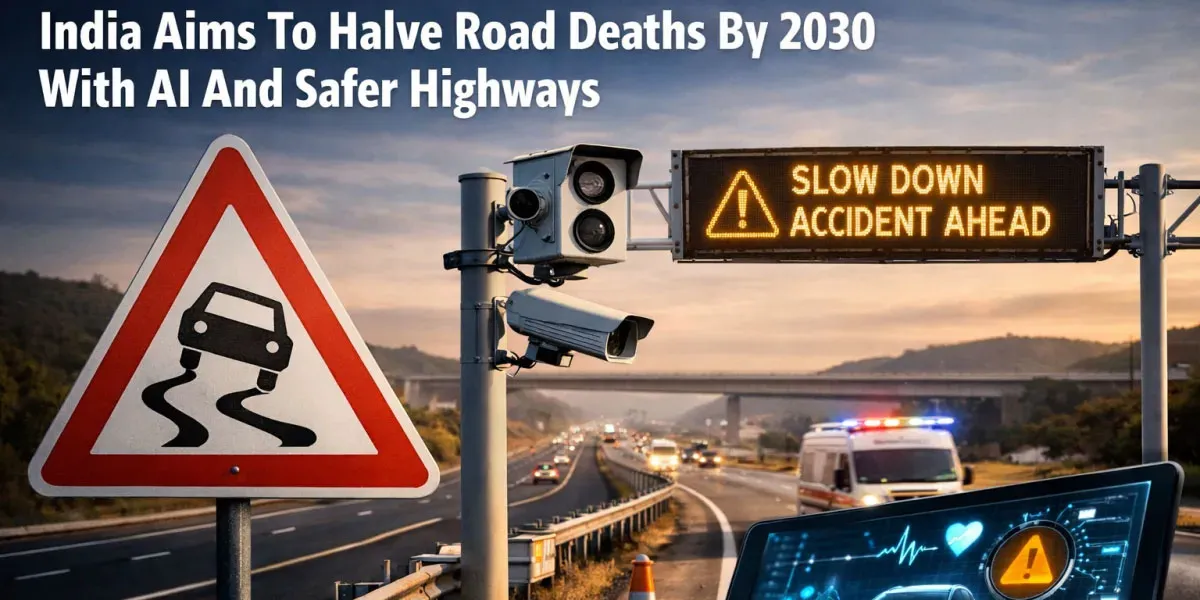
Advanced Traffic Management Systems (ATMS) are being expanded across national highways to include AI-based video incident detection, automatic number plate recognition cameras and wider surveillance networks. ATMS installations are already operational on several high-traffic corridors and the plan is to extend coverage to all four-lane national highways. These systems are expected to improve enforcement against violators, enable faster real-time response and provide data for targeted engineering improvements.
Vehicle safety requirements will be tightened with active safety features made mandatory in medium and heavy duty categories including M2, M3, N1, N2, N3 and quadricycles. The upgrades include anti-lock braking systems, endurance braking, vehicle stability functions, lane departure warnings, driver drowsiness alerts, blind spot information and moving-off information systems, with phased compliance effective from January one, 2027 for new models and from October one, 2027 through January 2028 for existing models. Site specific highway fixes such as black spot remediation, traffic calming and improved signage will complement technology and vehicle measures.