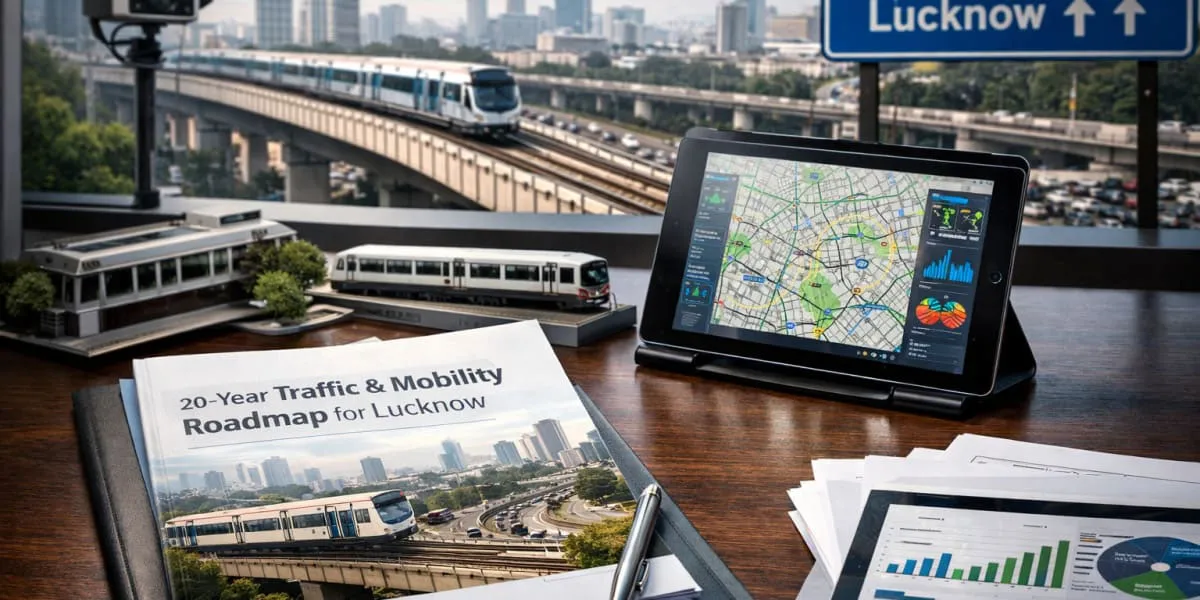
Citing VAHAN data, the submission notes that by 2025 Lucknow is expected to have around 3.18 million (mn) registered vehicles, with between 120,000 and 150,000 new vehicles being added annually, equivalent to 0.12 mn to 0.15 mn per year. The manuscript argues that this sharp rise has intensified congestion, parking pressure and the risk of road accidents, making long-term systemic planning essential. The roadmap projects that continuing current patterns will strain urban infrastructure and services. It calls for evidence-based forecasting and capacity planning across departments.
A central recommendation is the formation of a multi-department Traffic Management Task Force to broaden governance beyond policing to include the Traffic Police, Urban Development Department, Lucknow Development Authority, Municipal Corporation, Public Works Department, Transport Department, metro authorities and the Smart City Cell. The proposal requests mandatory monthly review meetings to ensure decisions are data-driven, time-bound and accountable. It stresses that institutional coordination and faster execution are required to prevent projects stagnating on paper.
The long-term roadmap prioritises expansion of metro and bus rapid transit networks, deployment of AI-based smart traffic signal systems, scientifically planned vending zones, permanent removal of illegal encroachments, pedestrian-friendly infrastructure and promotion of electric mobility and green transport as pillars of modern urban mobility. The document states that reactive measures are no longer sufficient and that integrated planning and multi-department coordination are essential for sustainable solutions and the city's future readiness.