
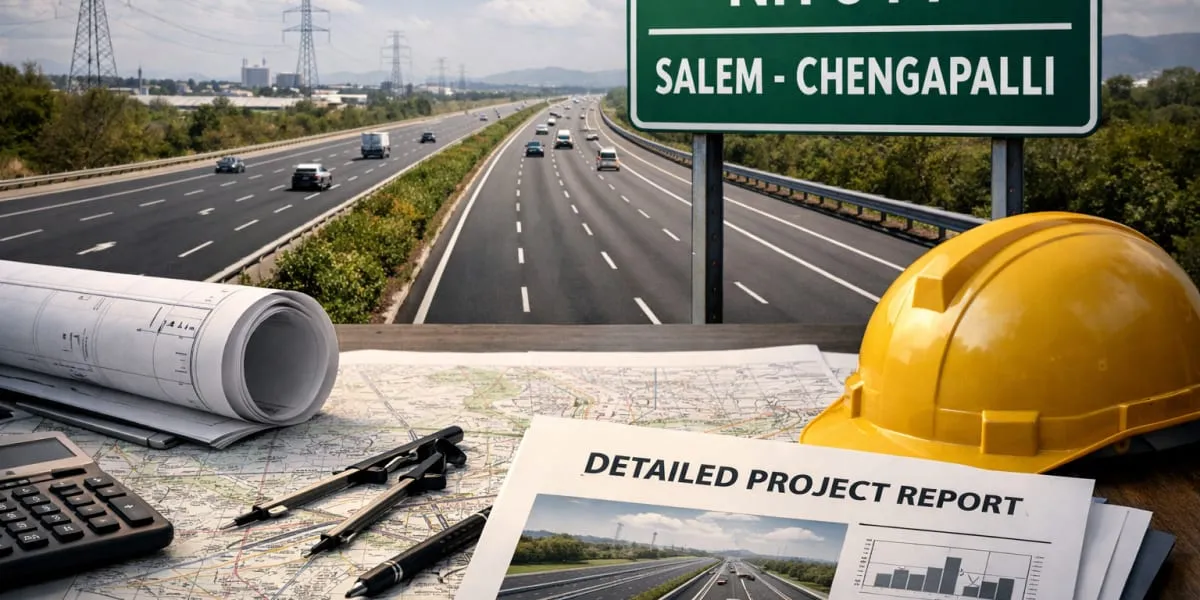
The report will encompass topographical surveys, traffic studies, pavement design, drainage plans and estimates for land acquisition and compensation, and will identify alignment options and bypasses where necessary. It will also include preliminary environmental assessment and social impact analysis to inform required clearances and mitigation measures, and will outline utility shifting requirements and preliminary costings to enable funding deliberations. Early engagement with local bodies and landowners will be important to refine alignments and compensation frameworks.
Improved carriageway capacity on NH 544 is expected to reduce travel time and congestion and to enhance freight movement between industrial and agricultural centres in the region. Better connectivity is likely to support local commerce, logistics and access to services, and to encourage investment in surrounding urban and peri-urban areas, while construction activity may provide employment opportunities and require measures to manage safety for road users and workers. Design proposals will incorporate maintenance planning and resilience measures to address extreme weather and drainage challenges.
Following completion of the detailed project report, authorities will seek statutory clearances, funding approvals and stakeholder consultations before moving to design finalisation and tendering. The DPR will form the basis for decisions on project phasing, delivery models and for prioritising land acquisition and environmental management, and periodic updates will be provided as the process advances and as implementation milestones are reached. Firm timelines will be set after approval of funding and final clearances, and project delivery will be aligned with logistical and environmental constraints.