
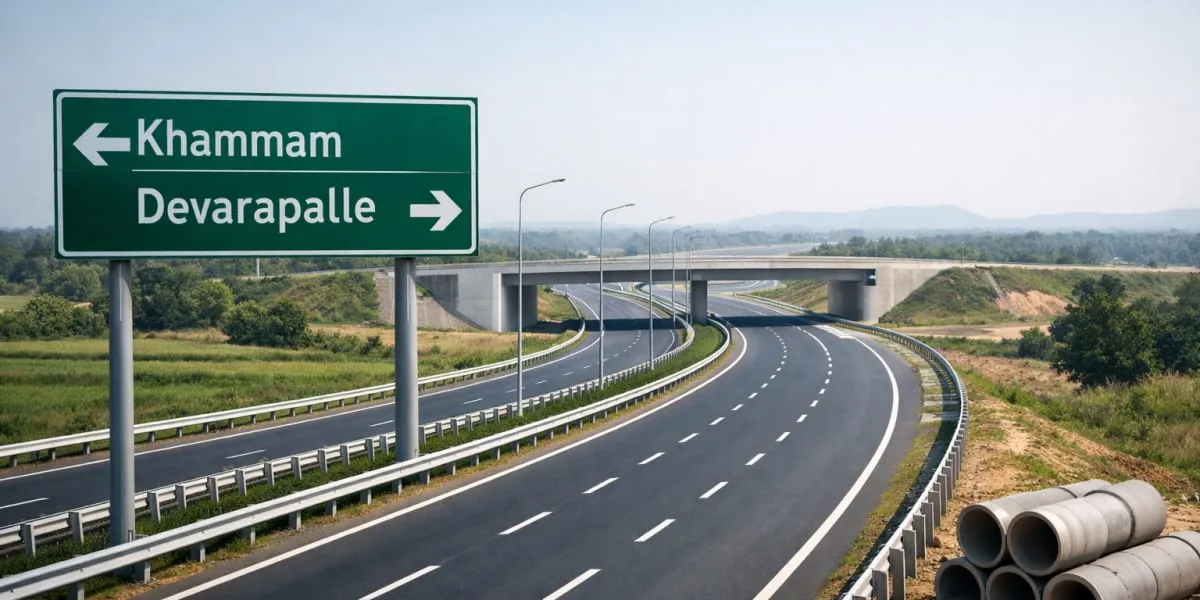
The four-lane expressway has been constructed under the Bharatmala Pariyojana initiative at an estimated cost of Rs 46,090 million (Rs 46,090 mn), reflecting significant public investment in road infrastructure. The corridor is intended to support high-speed movement and reduce congestion on existing arterial routes. Completion of the scheme is expected to accelerate economic activity along the alignment and to accommodate projected traffic growth.
The new alignment will shorten the distance between Hyderabad and Visakhapatnam by 56 kilometres, removing the longer route that passes via Suryapet and Vijayawada, and is projected to cut travel times substantially for both passenger and freight traffic. Operators and regional planners anticipate improved logistics efficiency and lower vehicle operating costs once the expressway is operational. The reduction in journey time is also expected to benefit intercity connectivity and regional trade flows and to improve the reliability of supply chains.
Work on one package covering the Recherla to Gurvaygudem section has been completed, whilst remaining packages continue to progress toward finalisation. The expressway will feature only nine designated entry and exit points along its length to maintain controlled access and enhanced safety for high-speed travel. An advanced traffic management system will be implemented with 360-degree CCTV cameras at two-kilometre intervals, and the project required acquisition of 1,996 acres of agricultural land across 31 villages; the surveillance network is intended to enable rapid incident response and assist routine maintenance activities.