
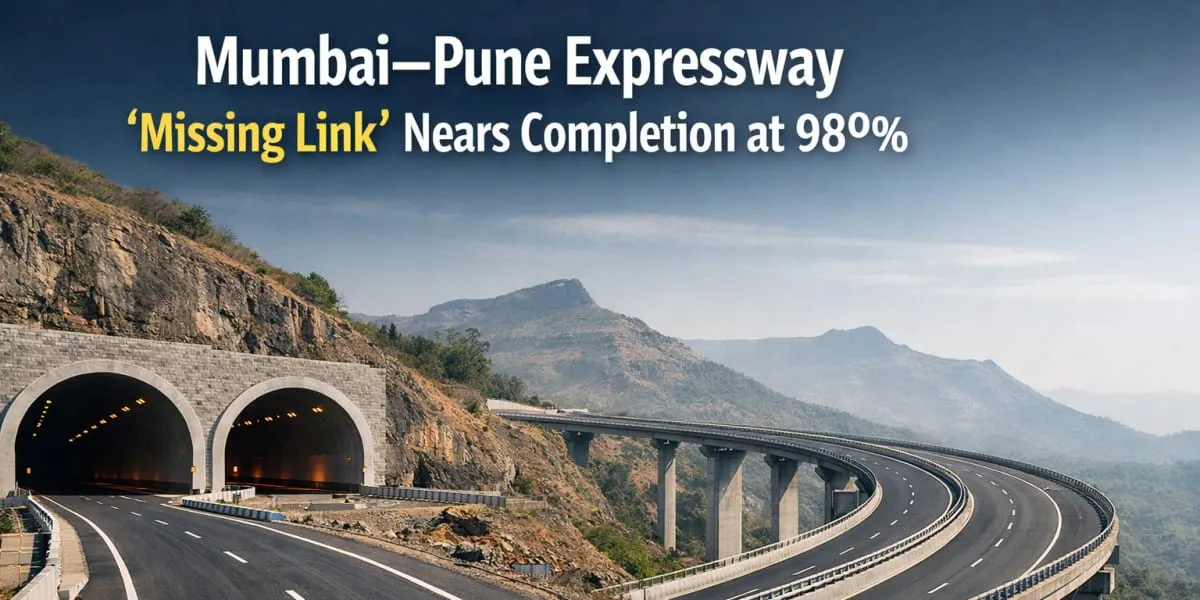
Senior MSRDC officials confirmed that the April 30 deadline for civil works remains unchanged and that the revised timeline set out in a written reply by the Deputy Chief Minister would be met. They said the earlier December delay had been caused by geographical and technical challenges and that traffic will be permitted only after all safety standards and load tests are completed.
As of March three only about two per cent of the work remains, with the Pune-bound corridor already complete and only six metres pending on the Mumbai-bound side. Trial runs and final safety clearances have been scheduled for late April to validate structural and operational readiness.
The urgency of the missing link was underlined by an early February accident in which a tanker carrying highly inflammable propylene gas overturned near Khopoli, causing a 32-hour traffic suspension and 20-km-long queues that left thousands of commuters stranded without food or water. The incident prompted renewed calls from authorities and commuters to expedite the project to provide a safer alternative route.
The Rs 6,695-crore project is reported as Rs 66,950 million (Rs 6,695 crore) and will be cited as Rs 66,950 mn. It connects Khopoli to Kusgaon, bypasses the Khandala-Lonavala ghat and shortens the existing 19.8-km stretch by over six km, cutting travel time between Mumbai and Pune by 25–30 minutes and alleviating a chronic bottleneck.
The corridor features a 900-metre viaduct at Khopoli rising about 60 metres, a one point six four-km tunnel and a 650-metre cable-stayed bridge with two 180-metre pylons built by Afcons Infrastructure Ltd. It then enters a nearly nine-km tunnel to emerge at Kusgaon and the new four-lane alignment is expected to attract light motor vehicles, improving traffic flow and providing a faster emergency diversion.