
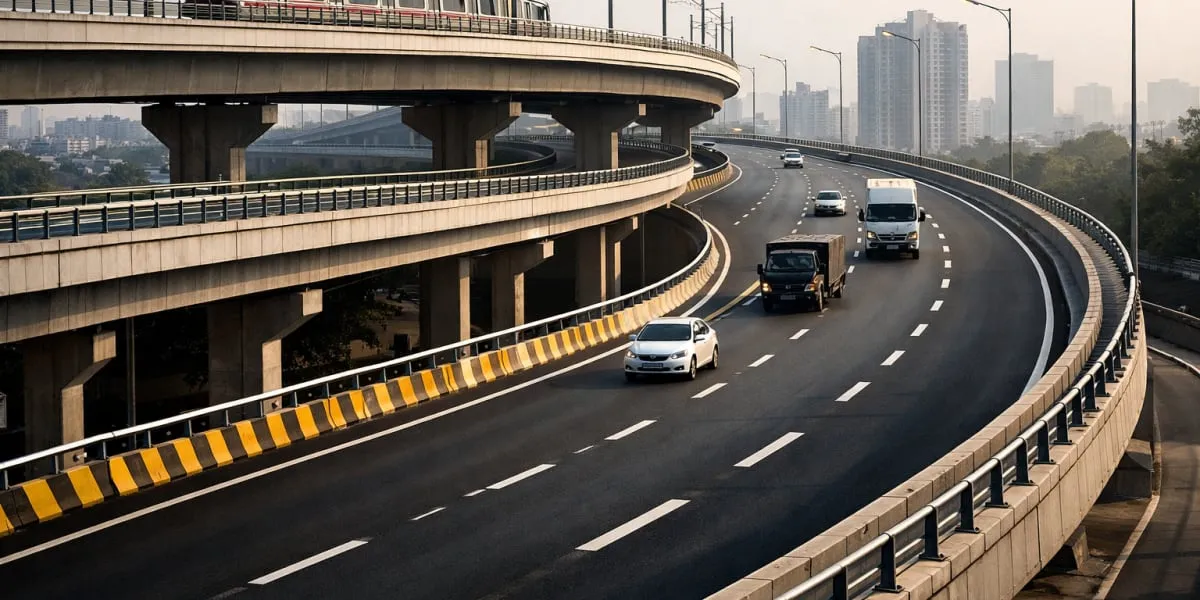
The double-decker design is intended to segregate local and through traffic and to provide more predictable journey times for buses and private vehicles. Lanes on the upper deck will carry longer distance traffic while the lower deck will cater to local movements and access to adjoining roads, according to the municipality. Planners stated the configuration should improve reliability and reduce delays without imposing a major footprint on existing urban space.
Construction proceeded over several years with staged closures and diversions to maintain traffic flow, the civic agency said, and contractors worked in coordination with traffic police and utility providers. The project formed part of the city's broader urban mobility plan and followed rounds of engineering assessments and stakeholder consultations. Officials acknowledged challenges such as land constraints and the need to relocate underground services, and they said those issues were addressed through phased planning.
Authorities indicated monitoring systems will be installed to assess traffic performance and to guide adjustments to signal timings and lane usage, and a routine maintenance schedule will be put in place to preserve the structure. The municipality said the flyover would be integrated with existing road networks and public transport services to enhance last mile connectivity. Residents and business groups were expected to adapt to new traffic patterns while civic planners monitor outcomes and report on improvements.