
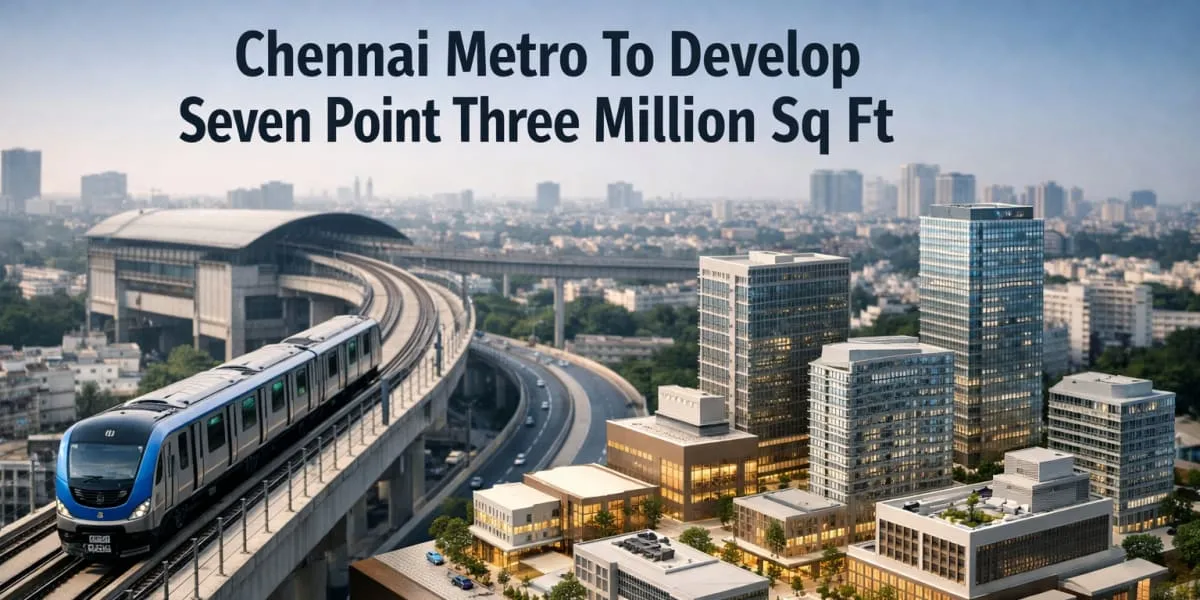
Planned uses span commercial space, institutional components, hospitality, multi-level parking and public-private last-mile connectivity hubs to support commuter flows and neighbourhood economies. Key nodal areas earmarked include Thousand Lights, Chetpet, Nandanam, Alandur, St Thomas Mount, Perumbakkam and Poonamallee Bypass, reflecting central and emerging growth nodes along the corridors. Phase two entails network expansion of approximately 118 km linking central, southern and south-western parts of the city and is expected to intersect high density urban catchments.
CMRL has identified parcels adjacent to stations and depots for potential projects and officials said feasibility studies and detailed project reports are being prepared to determine optimal land use and revenue models. The authority intends to pursue commercial development through transparent competitive bidding or joint venture arrangements subject to approvals from relevant government bodies. Delivery mechanisms will be finalised after financial modelling and regulatory clearances are secured.
The TOD initiative aligns with the Ministry of Housing and Urban Affairs drive to integrate metro infrastructure with urban development and to foster economic vibrancy near transit corridors, officials said. By unlocking surplus land value the metro operator aims to reduce pressure on ticket revenue while attracting private investment to accelerate network expansion and improve last-mile utility for commuters. Exact timelines for tendering have not been disclosed and CMRL expects to begin rolling out projects only after securing approvals and finalising delivery frameworks. The approach is expected to attract private capital while improving commuter convenience and urban amenities.