
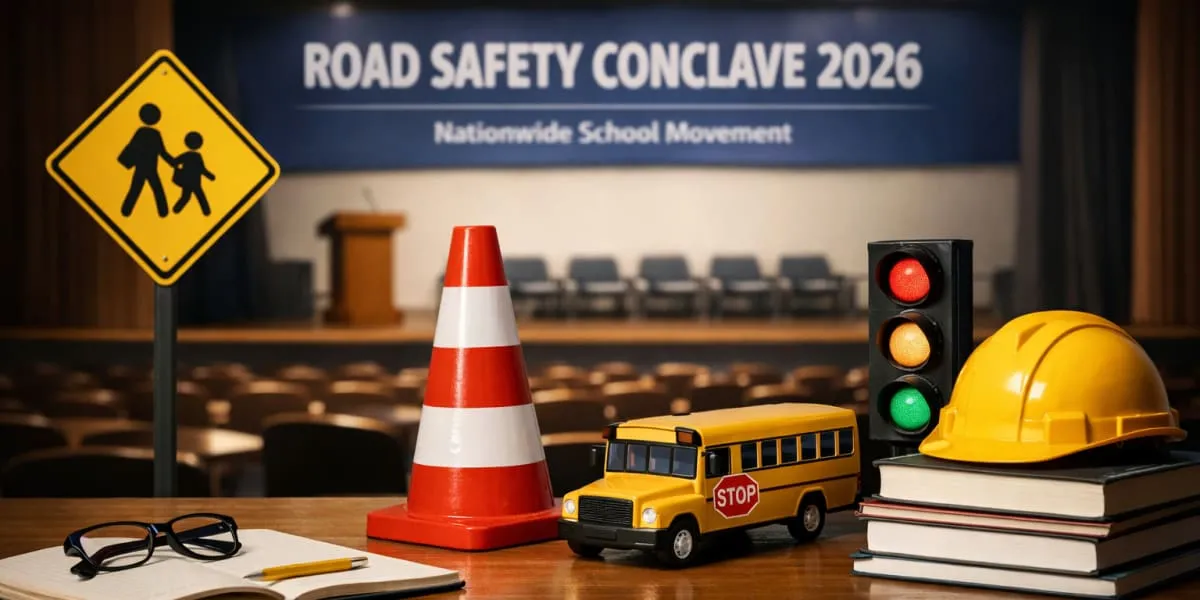
A key focus was on empowering students as change-makers through activities such as poster making, role play challenges, nukkad natak, panel discussions, documentary creation and innovation challenges. These initiatives were intended to educate participants and enable them to act as Road Safety Ambassadors within their communities, promoting responsible behaviour and grassroots awareness. The conclave also underlined school level interventions including establishment of Road Safety Clubs and Gate Safety Patrol systems.
The Minister of State for Road Transport and Highways reported that highway development has accelerated under current leadership with emphasis on integrating safety features alongside infrastructure expansion, noting a national network of approximately 146,000 km of National Highways. He outlined the elevation of road safety as a national priority since 2014 through a comprehensive four E strategy of Engineering, Enforcement, Education and Emergency Care and cited the Motor Vehicles Amendment Act, 2019 as strengthening enforcement. He emphasised that enforcement must be complemented by behavioural change and sustained public awareness.
The minister further described citizen centric measures including the PM RAHAT Scheme which provides cashless treatment of up to Rs 0.15 million (mn) for accident victims, supported by enhanced emergency response systems, trauma care and rapid response teams. Infrastructure improvements and technology such as crash barriers, intelligent signage, AI based monitoring, intelligent transport systems and FASTag enabled tolling were presented as transformative tools to reduce fatalities. Participants were urged to follow traffic rules, wear helmets and seat belts, avoid mobile distractions and to spread awareness, reinforcing a collective pledge towards safer roads and the vision of Viksit Bharat 2047.