
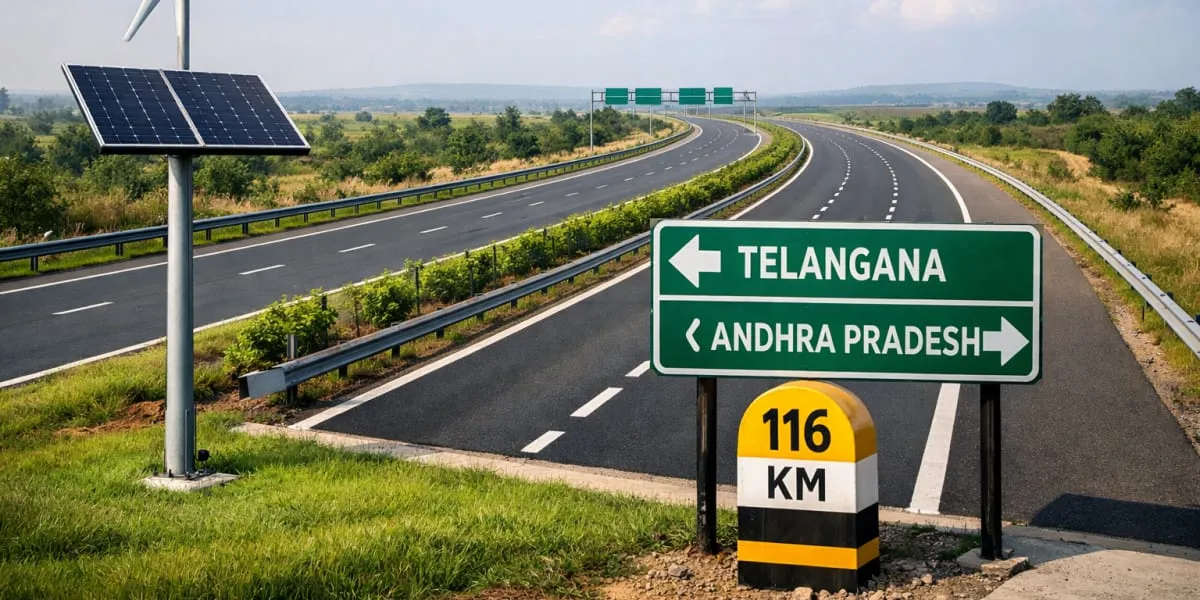
In a release, NHAI said the highway has a total length of 162.12 km and was developed under the Bharatmala Pariyojana as a strategic inter-corridor route connecting Telangana to the coastal belt of Andhra Pradesh. The authority said the corridor is expected to significantly enhance regional connectivity by reducing the Hyderabad–Rajahmundry distance by about 56 km and cutting travel time by two to four hours. The route is designed as an efficient link for long distance freight and passenger movements across the region.
NHAI indicated the corridor will provide an efficient alternative route to Visakhapatnam via NH-16 while helping to decongest existing highways such as NH-65 and NH-16 and improve road safety. The alignment follows a greenfield route through key locations including Khammam, Tallampadu, Wyra, Kalluru, Vemsoor, Chinthagudem, Chintalpudi, Jangareddygudem, Koyyalagudem and Devarapalle, improving connectivity across rural and semi-urban areas. Officials said the project is expected to support regional economic activity by shortening travel times and facilitating logistics.
While a substantial portion is now operational, NHAI noted that certain sections remain closed pending completion of ancillary works and clearances. Package one, covering Thallampadu to Somavaram, is pending the construction of a road overbridge, and Package five, between Koyyalagudem and Devarapalle, is structurally complete but awaiting final clearances. The authority aims to make the entire stretch fully operational by June 2026 and said commissioning will be followed by regular maintenance and monitoring. Authorities noted arrangements for traffic management and signage on the operational sections.