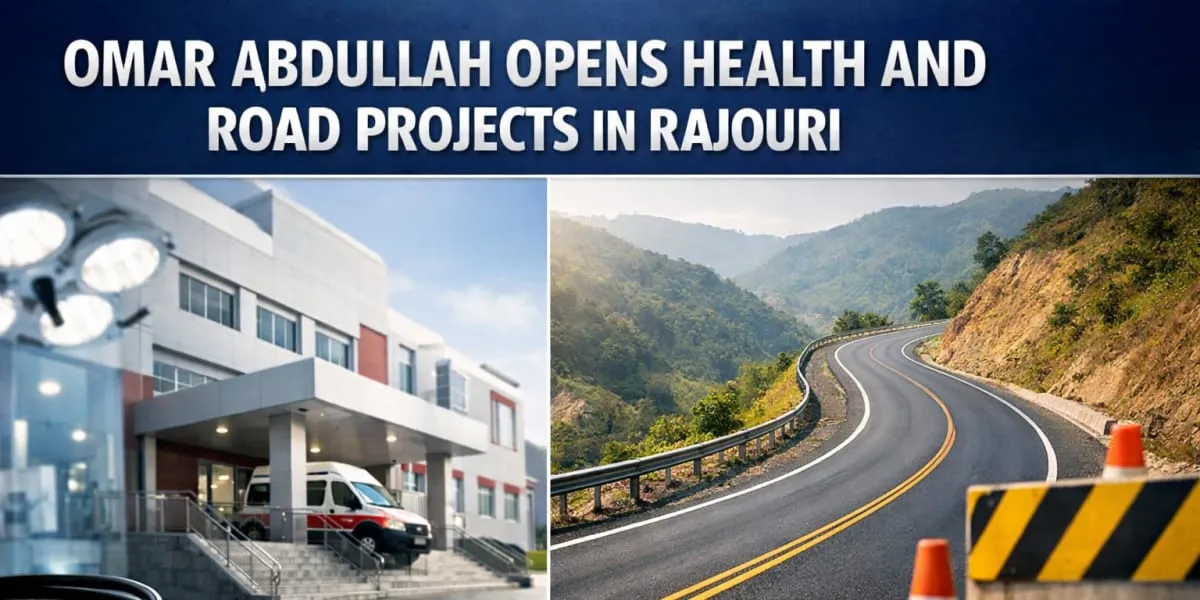
Authorities highlighted the hospital's role given Nowshera's large geography and links to the Line of Control (LoC) regions of Jhangar, Kalsian, Sariya and Bawani. The facility is expected to benefit residents of Nowshera, Seri, Lamberi and Siot blocks and reduce travel for treatment. A new ambulance has been commissioned to strengthen emergency response across the sub-division.
Abdullah inaugurated the long-awaited road from National Highway 144 to Nowshera town via Rajal-Thatthi, a project set to improve connectivity on the Jammu-Poonch route and relieve local transport bottlenecks. At a public rally he criticised the central government for unmet pre-poll promises on restoring statehood and warned against linking delimitation with reservation legislation passed in Parliament in 2023. He also said gas shortages linked to tensions in West Asia were likely to ease as conditions improve. Thousands attended and welcomed the development initiatives.
Concurrently, Jammu and Kashmir Health and Education Minister Sakina Itoo announced plans to establish a degree college in Seri block and flagged off the ambulance for SDH Nowshera, indicating further investment in education and health. Officials said the college will expand local higher education options and support regional development. The events form part of a broader push in Rajouri district to strengthen services and connectivity in border communities.