
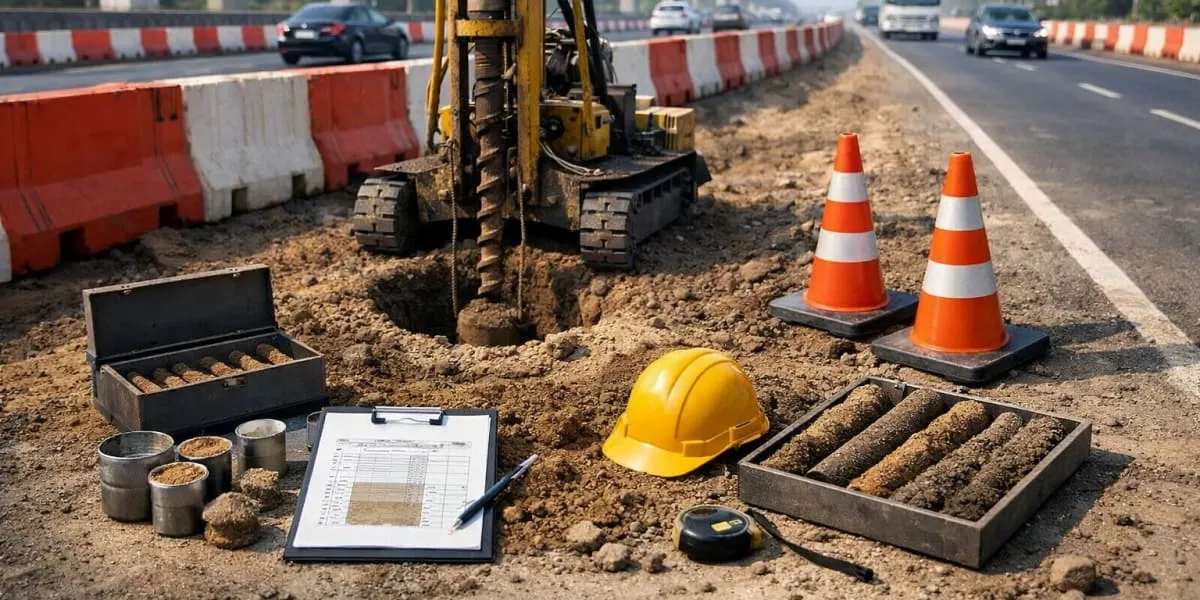
The project carries a budget of Rs 21 billion (Rs 21 bn) and aims to ease traffic congestion on the popular coastal stretch. Geotechnical teams will extract soil samples to determine the depth and sequence of sand, clay, soft rock and hard rock layers. Investigations will extend to depths of up to 25 metres to inform foundation design. Laboratory testing will assess bearing capacity, compressibility and groundwater conditions to support safe design.
An engineer associated with the work said samples would be analysed by the design department to determine foundation types and other structural parameters. The tests are scheduled over the next few months and will guide the design of pile foundations and related structures. Officials indicated that soil data will also influence construction sequencing and resource allocation. The design department will model load transfer and select suitable pile lengths and diameters based on the soil profiles.
Local travel is expected to be affected during the testing phase by temporary barricades and periodic drilling activities, and authorities have advised motorists to follow diversion signage. Project managers plan to incorporate the geotechnical findings into detailed drawings before commencing major piling and superstructure work. Once underway, the elevated corridor is intended to improve travel times and urban connectivity along the East Coast Road. Stakeholders expect the findings to reduce unforeseen delays during construction and to refine cost estimates.