
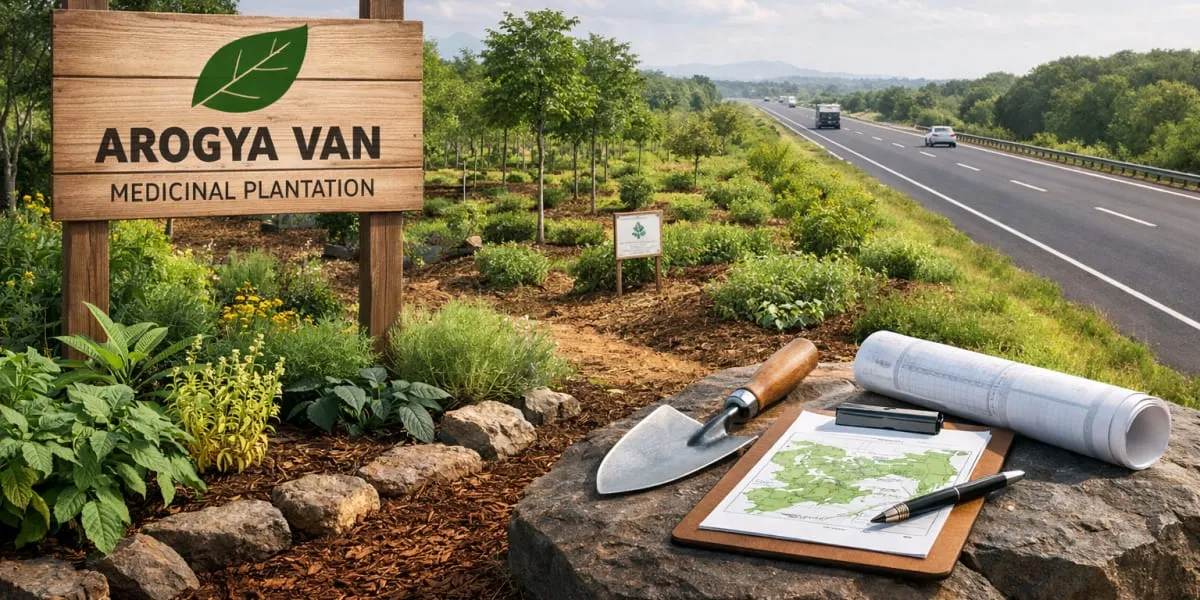
In the first phase an action plan covers 17 land parcels spanning 62.8 hectares where 67,462 medicinal trees will be planted across National Highway projects in Madhya Pradesh, Haryana, Delhi-NCR, Andhra Pradesh, Gujarat, Karnataka, Odisha, Tamil Nadu, Rajasthan, Maharashtra and Chhattisgarh. The projects are intended to demonstrate the role of native and medicinal species in roadside ecology. Selection of sites took account of agro-climatic suitability and public visibility.
Approximately 36 tree species with recognised medicinal properties such as neem, amla, imli, jamun, lemon, gular and maulsari have been identified and will be planted according to local climatic and soil conditions. Priority will be given to land parcels close to toll plazas, wayside amenities, interchanges and cloverleaf junctions to maximise outreach. Planting patterns will aim to support pollinators and create habitat connectivity.
NHAI has identified about 188 hectares of additional vacant land for plantations during the forthcoming monsoon season to improve survival rates and long-term sustainability. The thematic model focusing on medicinal species is expected to enhance ecological, educational and cultural value of roadside green spaces. Adoption of this approach aligns with national priorities to promote traditional systems of medicine such as Ayurveda and conserve indigenous medicinal flora.
The plantations are envisaged as living repositories and knowledge hubs that will raise public awareness about traditional medicinal knowledge and sustainable living practices. The initiative reinforces NHAI commitment to develop environmentally sustainable infrastructure by integrating ecological restoration with public outreach. It aims to create a network of green corridors that strengthen roadside ecology and civic engagement.