
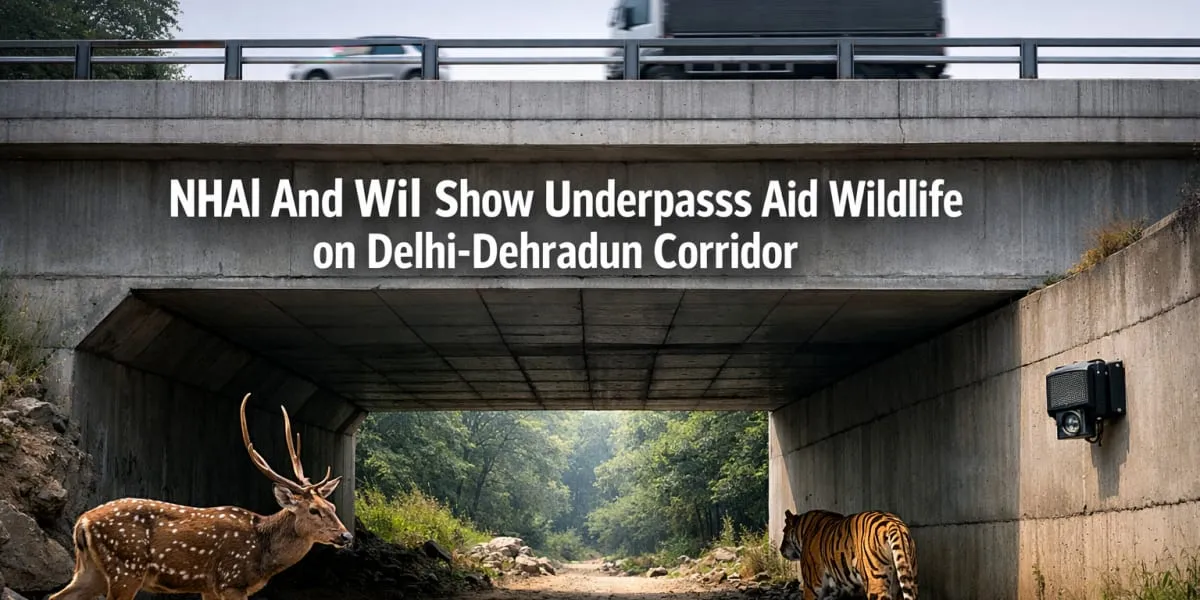
The research was conducted along an 18 km stretch between Ganeshpur and Asharodi and includes 10.97 km of animal underpass and an elevated corridor averaging six to seven metres in height. The study area was divided into three zones covering flat riverbed, hilly terrain and mixed Sal forest in the Shivalik range. The methodology comprised a 40-day monitoring programme using 150 camera traps and 29 acoustic recorders.
The monitoring recorded 111,234 images of humans, domestic animals and wildlife, of which 40,444 images were attributed to 18 wild species using the underpasses, including carnivores, herbivores, ungulates, pheasants and primates. The golden jackal was most frequently captured followed by nilgai, sambar and spotted deer while smaller mammals such as the Indian hare also regularly used the structures. The study recorded 60 instances of elephants using the corridors, indicating that even the largest animals can navigate the infrastructure to maintain migration patterns.
Analysis identified strategic soundscape management as a primary factor influencing underpass use and showed that generalist species have habituated to higher traffic sound while noise-sensitive species use quieter segments. The report recommends targeted noise reduction measures including sound barriers in high-frequency crossing areas to enhance passage for sensitive species and reduce human-wildlife conflict. The findings underscore reductions in the risk of population isolation in the Shivalik landscape and NHAI will continue to adopt data-driven mitigation strategies to balance infrastructure growth with biodiversity conservation.