
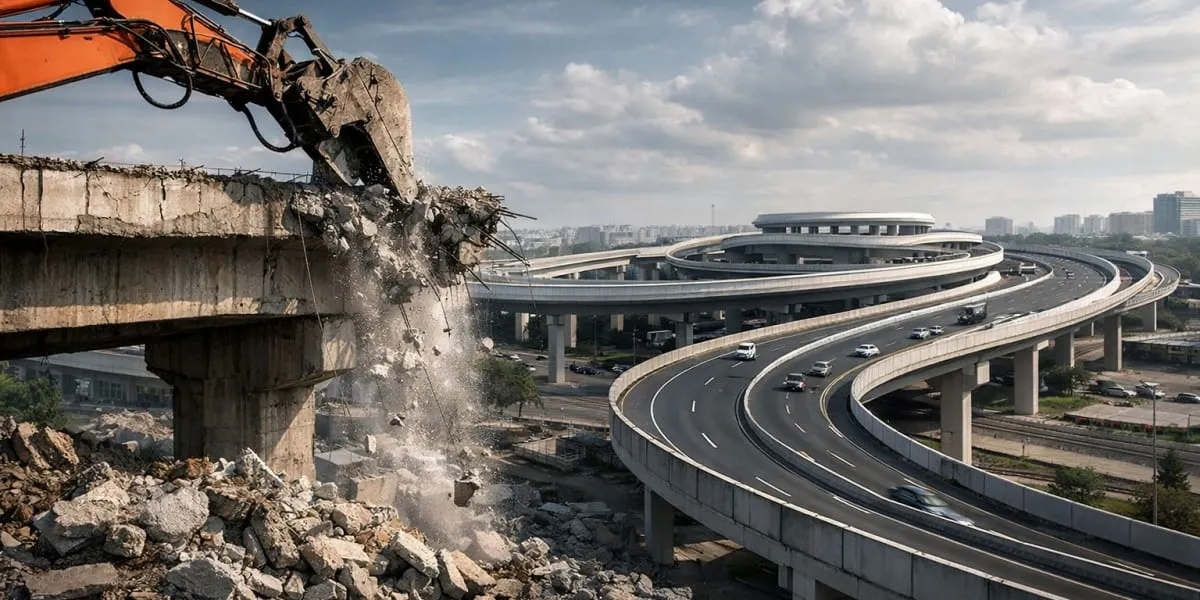
The scheme is designed to improve access to the Sir M Visvesvaraya Terminal and surrounding neighbourhoods. The decision follows assessments that the existing bridge, built by the railways two decades ago, no longer meets current traffic needs.
The project budget has risen to Rs 4,360 million (mn), equivalent to Rs 436 crore, to accommodate a complex design that addresses commuter last-mile challenges. The engineering solution envisages a circular elevated rotary with four ramps leading to Kammanahalli in the north, Maruthi Seva Nagar in the west, Banaswadi in the east and Byappanahalli in the south. The revised plan also incorporates measures to separate local and long-distance traffic.
The scope includes a one point five-kilometre flyover from Maruthi Seva Nagar Road intended to prevent clashes between local traffic and long-distance commuters. Bengaluru Smart Infrastructure Limited, abbreviated as B-SMILE, will implement the scheme alongside other urban mobility initiatives in the city. Authorities have indicated that comprehensive traffic diversion plans will be coordinated across agencies before demolition and construction commence.
Construction is expected to cause significant disruption along key arterial stretches such as Dodda Banaswadi Road, Byappanahalli Road and Kammanahalli Main Road, which already experience heavy congestion. Officials have acknowledged technical complexity due to active railway lines in the vicinity and have proposed a railway overbridge at Byappanahalli Road to improve connectivity with Old Madras Road. The project is presented as a critical intervention to enhance urban mobility and reduce persistent bottlenecks in one of Bengaluru's busiest corridors.