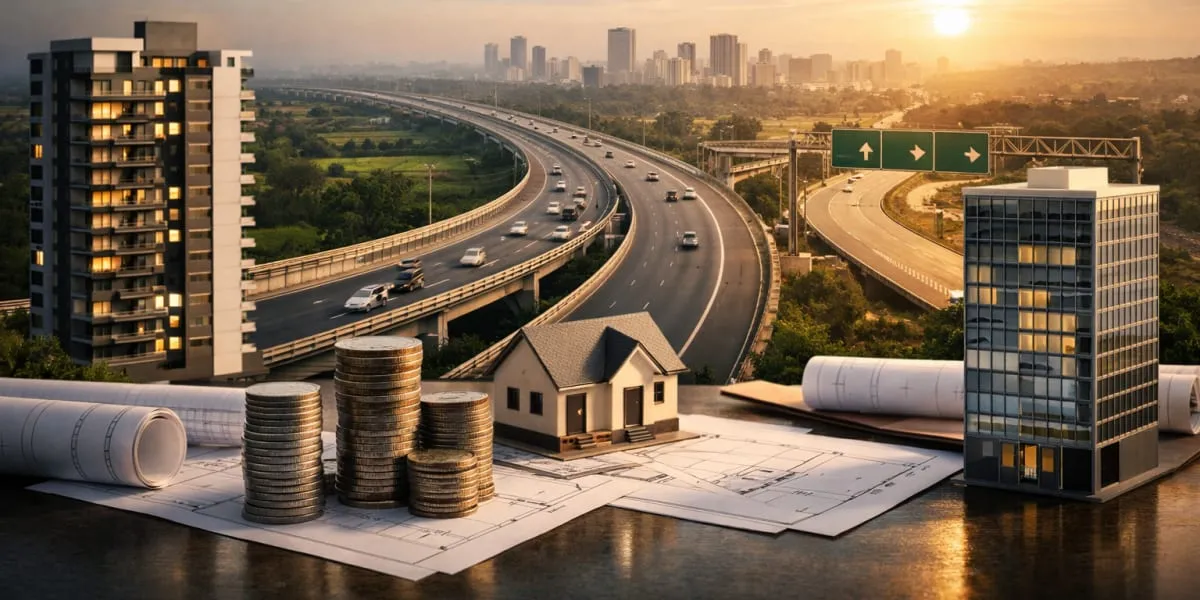
The Ganga Expressway is projected to raise property prices by 12–15 per cent along the new corridor in Uttar Pradesh (UP) and to reshape residential and commercial markets across the region. Developers and local authorities are recalibrating plans to capture rising demand and to optimise land use around interchanges and junctions. The project is presented as a catalyst for improved connectivity between smaller towns and larger urban centres, altering commuting patterns and expanding the effective labour catchment for cities.\n\nLand parcels near proposed exits and service nodes have attracted renewed interest from private builders and institutional investors, supporting expectations of higher transaction volumes. Residential segments are likely to see demand for mid?size homes and plotted developments, while logistics and warehousing are projected to gain from shorter transit times to major markets. Retail and hospitality providers are also reported to be evaluating site options that would benefit from increased traveller and commuter flows.\n\nLocal administrations are revisiting zoning and infrastructure plans to accommodate potential population inflow and to ensure provision of water, sewerage and power. Developers have indicated plans for phased launches that align with staged road commissioning, seeking to mitigate risk while responding to anticipated buyer interest. The shift in supply dynamics is expected to accelerate construction activity and to influence pricing in adjacent neighbourhoods.\n\nMarket observers caution that benefits will depend on timely delivery of ancillary infrastructure and on measures to preserve affordability for existing residents, and they stress the need for coordinated planning across districts. If implemented judiciously, the corridor could deliver sustained economic activity, diversified investment and upgraded urban services across UP. The transformation is likely to be gradual but foundational for regional real estate dynamics.