
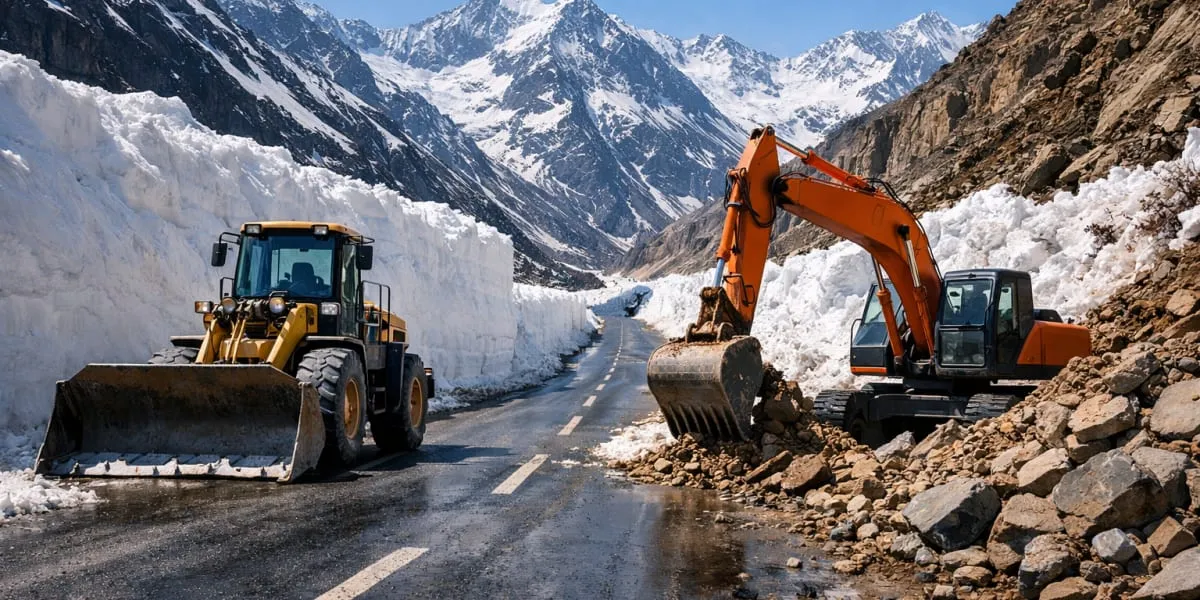
Engineering units deployed heavy machinery and specialist teams to stabilise slopes and clear the carriageway. Work included the removal of snow and rockfall, reinstatement of the road surface and installation of protective barriers at vulnerable locations. Safety inspections were completed before regulated traffic was permitted to use the highway. Coordination with local administrations and police ensured regulated convoy movement where single-lane passage was necessary.
The highway connects Manali in Himachal Pradesh with Leh in Ladakh and functions as a crucial supply corridor and tourist route. Its reopening will ease transport of food, fuel and other essentials to high?altitude communities and facilitate tourist access. Local administrations will manage traffic controls and provide information on approach roads and parking.
The 42-day clearance followed prolonged winter conditions that had rendered several stretches impassable and prone to avalanches. Crews worked under challenging weather and on steep, rugged terrain to re-establish a continuous carriageway. Temporary diversions and speed restrictions remain in sections where further repairs are required. Specialised avalanche control measures were employed on known danger slopes to reduce immediate risk.
The BRO will continue monitoring the route and conduct ongoing maintenance and mitigation work through the season. Authorities advised motorists to check road conditions and follow official directives to ensure safety during transit. Commercial transporters and tour operators have been briefed on load and timing restrictions to minimise hazards. The reopening represents a significant logistical accomplishment for the region and offers a timely boost to local economies reliant on road connectivity.