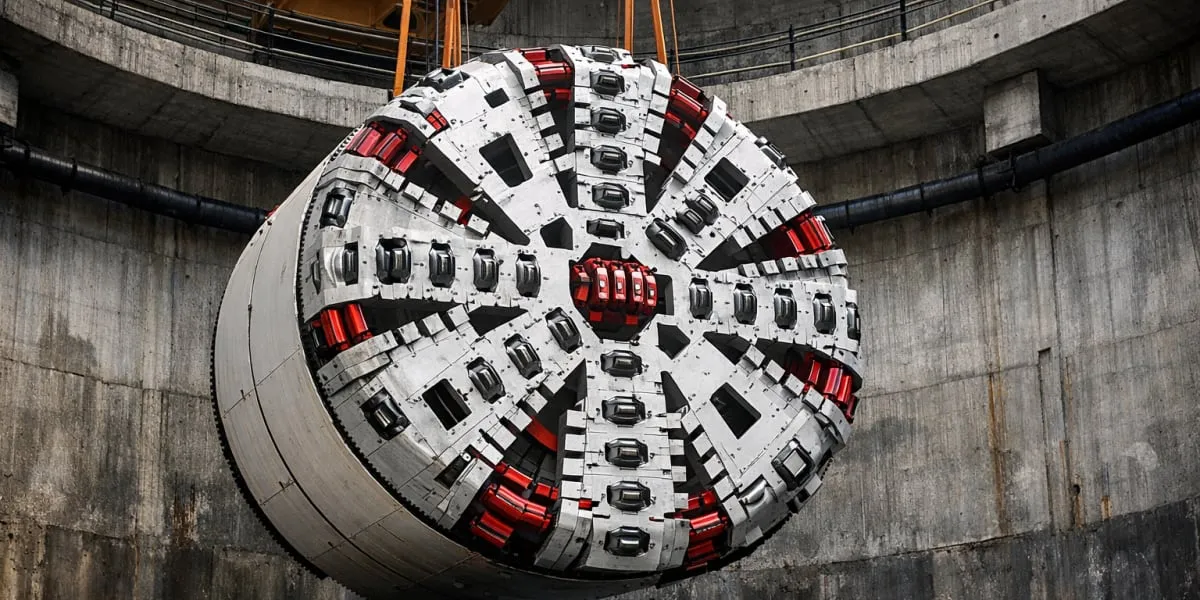
The second TBM will begin tunnelling from Sawli towards Vikhroli in Mumbai, and the cutterhead for the first TBM was lowered at Vikhroli last week, the release added. Both machines will now undergo final assembly and commissioning trials before beginning excavation work in the first week of July, after which they will start the planned drive through the tunnel alignment. NHSRCL said the TBMs are intended to deliver a continuous excavation sequence to meet project schedules while adhering to safety protocols.
Each cutterhead is fitted with 84 cutter discs, 124 scrapers and 16 bucket lips that will perform cutting, scraping and muck removal during tunnelling operations, the release explained. The two slurry-based Mix Shield TBMs weigh 3,080 tonnes and 3,184 tonnes respectively, and each measures 95.32 metres in length, reflecting the scale of the machines assembled on site. The machines incorporate components such as the cutter wheel, main bearing, jaw crusher, erector, main shield, tail shield and four specialised gantries to support the tunnelling process.
NHSRCL stated that the TBMs can operate at a maximum cutterhead speed of four revolutions per minute and achieve an excavation rate of up to 49 mm per minute while maintaining safety standards. The machines are being assembled to build a 16-km section of the 21-km Mumbai tunnel, a stretch that includes a seven-km undersea tunnel beneath Thane Creek and will form India's first undersea rail tunnel. The agency said commissioning will be completed before the machines enter excavation and that the works form part of the wider Mumbai-Ahmedabad high-speed rail project.