
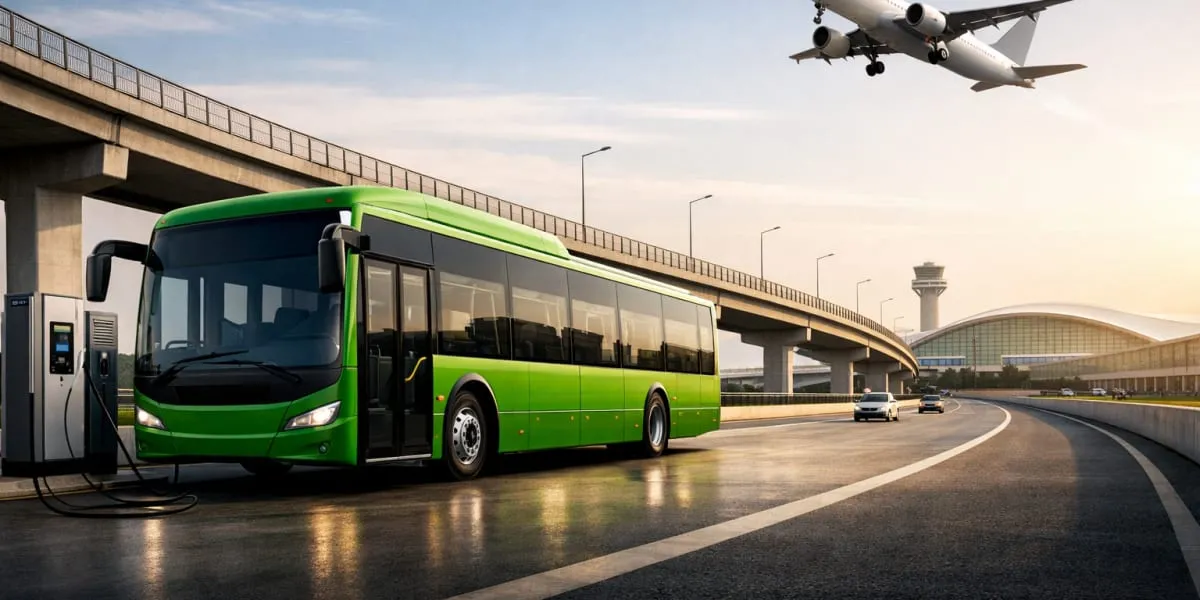
During the review the administration considered plans to operate 500 electric buses across Noida, Greater Noida and the Yamuna Expressway Industrial Development Authority (YEIDA) region, with 110 buses earmarked for the first phase. The state is also accelerating EV charging infrastructure development alongside fleet expansion, noting that Uttar Pradesh currently has around 1.55 million (1.55 mn) registered electric vehicles. Authorities set a target to establish 10,000 charging stations by 2030 and reported that about 2,500 charging stations are operational at present.
Beyond urban mobility the government examined progress on multiple expressway projects and emphasised faster execution and land acquisition timelines. Officials were directed to complete land acquisition for the Agra-Lucknow-Purvanchal Link Expressway, the Jewar Link Expressway and the Jhansi Link Expressway by the end of June. It was reported that nearly 55 per cent of land acquisition has been completed for the Farrukhabad Link Expressway, while the alignment for the Meerut-Haridwar Expressway has received approval and an acquisition action plan is being prepared.
Ministers and senior officers discussed how improved connectivity infrastructure is expected to support industrial growth and investment opportunities and reviewed logistics hubs and urban infrastructure initiatives in parallel. Projects linked to industrial development including the proposed Seed Park, Textile Park and Defence Corridor were examined and monitoring mechanisms were reinforced. Officials were instructed to strengthen oversight for projects tracked under the state programme through a dedicated monitoring cell.