
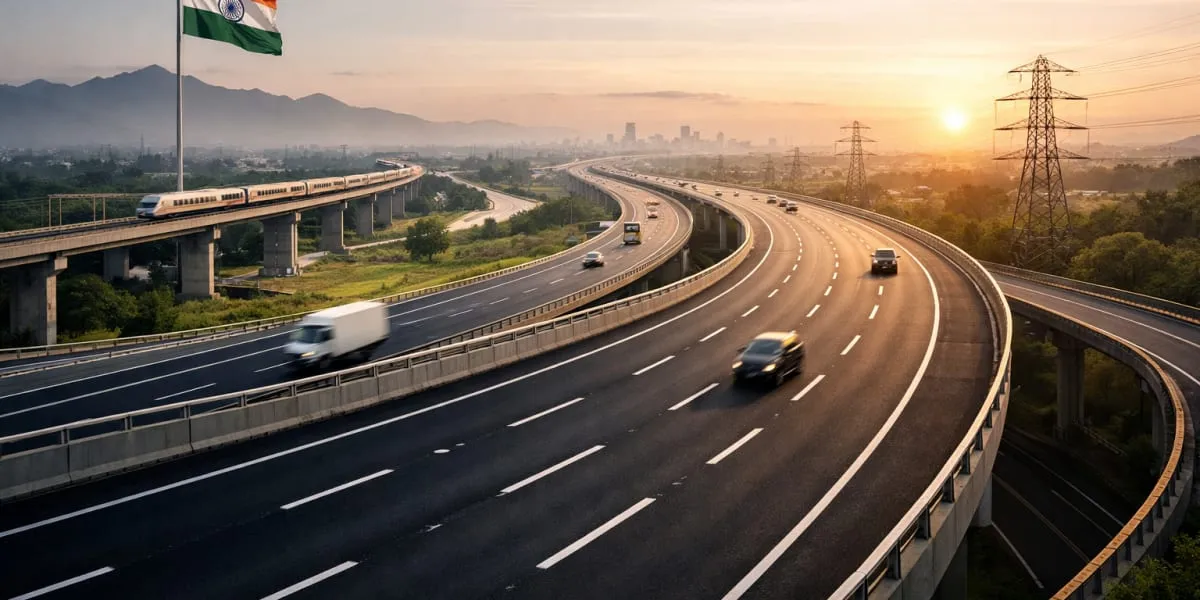
National Highway length rose from about 91,287 kilometres in 2014 to over 146,572 kilometres in fiscal 2025-26, an increase of nearly 61 per cent. Construction speed climbed from roughly 11.6 kilometres per day in 2013-14 to nearly 34 kilometres per day in 2025, driven by reforms and better execution. A study by the Indian Institute of Management Bangalore found that highways reduced average logistics costs.
The Delhi–Mumbai Expressway, planned at 1,386 kilometres with a projected cost of about Rs 1 tn, will link six states and had sections inaugurated progressively by the Prime Minister. The 246-kilometre Delhi–Dausa–Lalsot stretch was built at a cost of over Rs 120 billion (bn) and the 87-kilometre Vadodara–Bharuch section opened in 2024; Gujarat sections of 36 kilometres and 27.5 kilometres followed in 2026. The expressway is expected to shorten travel and boost freight efficiency along its corridor.
Regional projects include the Delhi–Meerut Expressway, spanning about 82 kilometres and developed at around Rs 83.46 billion (bn), and the Dwarka Expressway of 29 kilometres built for about Rs 90 billion (bn). The Bengaluru–Mysuru Expressway of 118 kilometres was completed for about Rs 84.8 billion (bn) and reduced the journey from nearly three hours to 75 minutes. These corridors use modern interchanges and traffic management to ease congestion and support commerce.
The Delhi–Dehradun Economic Corridor is a 213-kilometre six-lane route developed at about Rs 120 billion (bn) that cut travel from over six hours to around two and a half hours. It includes a 20-kilometre sensitive stretch with a 12-kilometre elevated wildlife corridor and a 370-metre tunnel. The ministry describes these outcomes as central to the Viksit Bharat vision.