
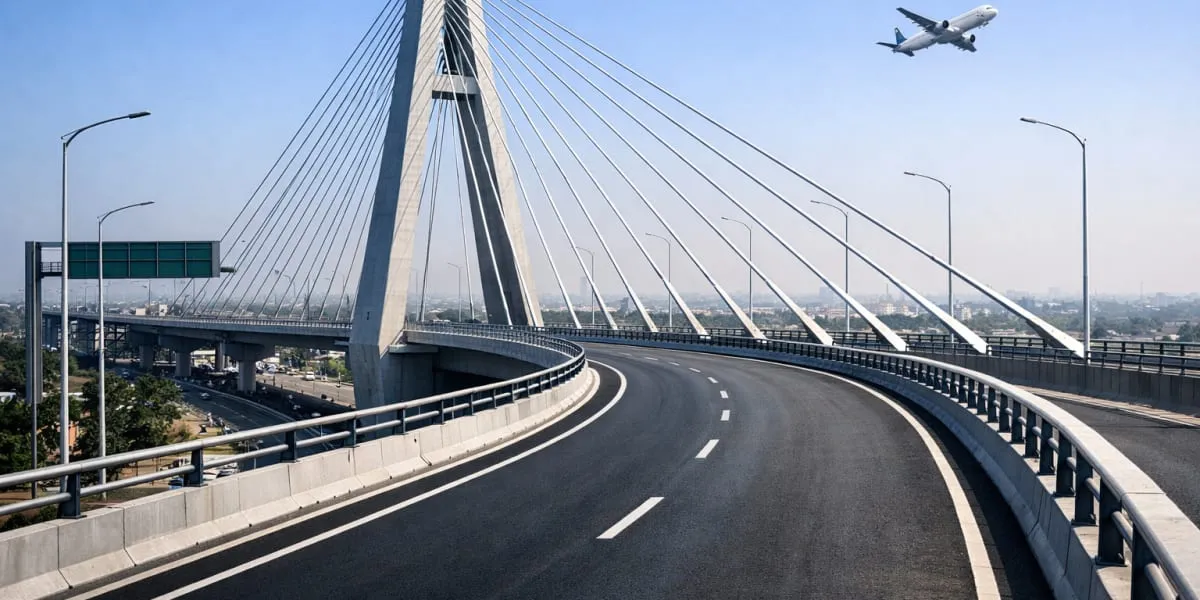
The six-lane flyover was jointly developed by the Roads and Buildings Department (RBD) and the Ahmedabad Urban Development Authority (AUDA), with both agencies sharing the project cost equally. The cable-stayed configuration allows longer spans between supports and a prominent central pylon that defines the structure's profile. RBD and AUDA indicated that the design accommodates heavy vehicular loads while reducing the footprint compared with conventional flyovers. The agencies said the bridge will streamline traffic flow on one of the busiest road corridors in the state.
Officials said the new structure, which is Gujarat's first urban cable-stayed bridge, is expected to significantly reduce congestion at the busy Bhat Circle junction and shorten travel times for commuters. The design aims to provide smoother movement and greater reliability for road users linking the city and the airport. Authorities noted that reduced idling and improved traffic distribution on feeder roads will contribute to better journey predictability for commercial and private vehicles. The flyover also forms part of targeted measures to manage growing urban transport demand.
The chief minister described the project as reflective of the state government's commitment to building world-class infrastructure and supporting rapid urban growth, and said the flyover forms part of broader efforts to modernise the Ahmedabad-Gandhinagar transport network. Authorities intend to continue strengthening connectivity across the region through similar upgrades, integrating this intervention with existing transport plans. The initiative is positioned as a long-term investment in mobility that aims to support economic activity and passenger convenience.