
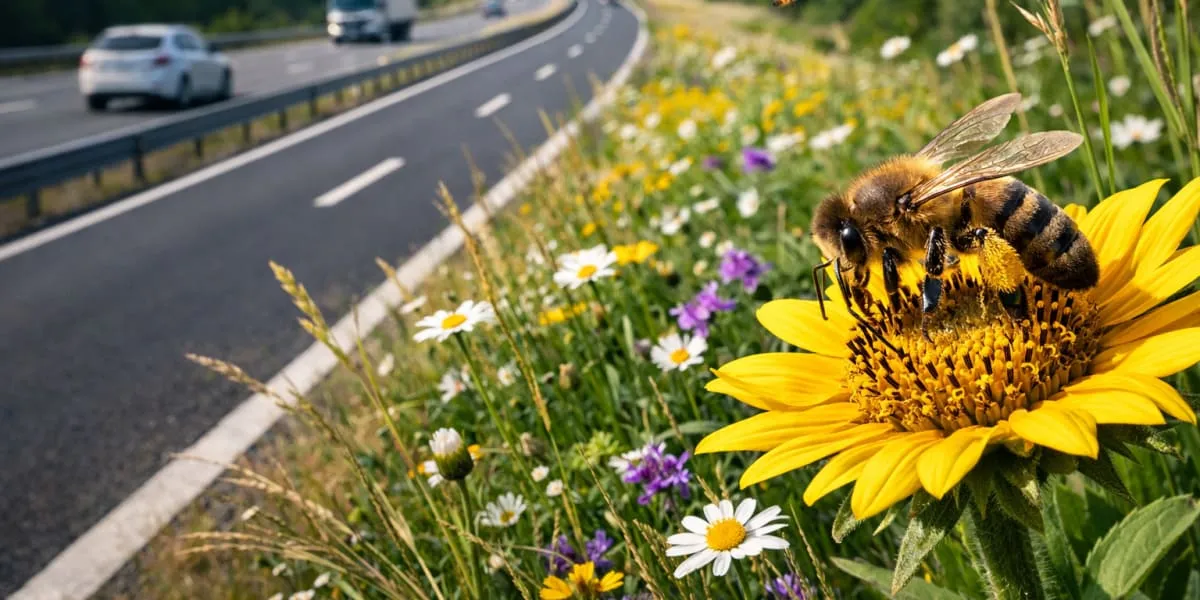
It was inaugurated by the NHAI regional officer for Odisha, Pradeep Kumar Lal, in the presence of Bhubaneswar Project Implementation Unit (PIU) project director Suraj Kumar Singh, and is being implemented in partnership with the concessionaire Puintola Ichchapuram TOT Private Limited. NHAI officials said the Bee Corridor has been designed to restore and strengthen habitats for honeybees and other pollinating insects. The scheme is described as contributing to roadside greenery while supporting agricultural productivity.
As part of the first phase, 345 saplings have been planted along the Tangi–Ichchapuram section of NH-16, chosen from nectar and pollen rich species such as Jamun, Neem, Drumstick (Moringa) and Gulmohar to provide a reliable food source for pollinators. Officials indicated plantation activities have begun in Sambalpur and Dhenkanal and that NHAI plans to plant nearly 20,000 flowering trees along highway stretches in Sambalpur, Berhampur and Dhenkanal. The planting is intended to enhance roadside green cover and create habitat corridors linking fragmented natural areas.
The next phase will include a diverse mix of native and flowering species, including Neem, Karanj, Arjun, Kadamba, Jamun, Tamarind and Kanchan, selected to ensure staggered flowering throughout the year. Such sequencing is expected to provide a continuous source of nectar and pollen and to sustain honeybee populations and other beneficial insects. Once fully established the Bee Corridor is expected to improve roadside biodiversity, increase green cover and contribute to healthier ecosystems. NHAI officials suggested the scheme could serve as a model for pollinator friendly highway development in other parts of the country.