
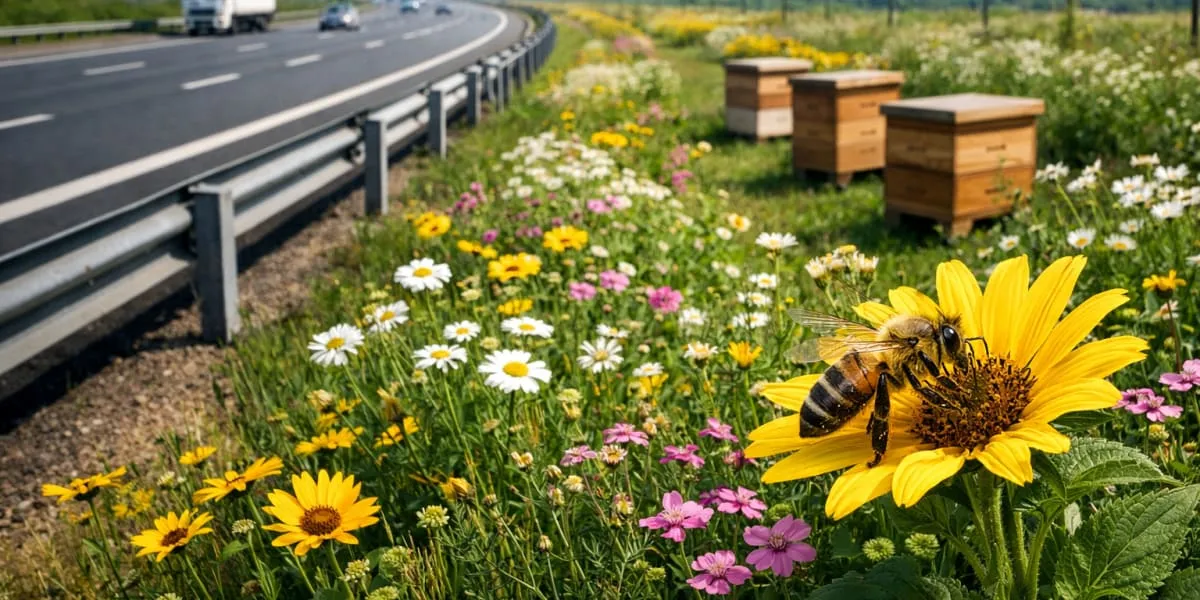
As part of the first phase, 245 saplings of Jamun, Neem, Drumstick (Moringa) and Gulmohar have been planted along the highway to create a continuous green belt that supports pollinators. The flowering species were selected to provide nectar and pollen throughout the year and to sustain honeybees and other pollinating insects while reinforcing local biodiversity. Planting locations were chosen to balance ecological benefit with roadside safety and visibility.
NHAI plans to gradually expand the bee corridor to other districts including Sambalpur, Brahmapur and Dhenkanal and has set a target of planting nearly 20,000 flowering trees across the network. The expanded plantation will include species such as Neem, Karanja, Arjun, Kadamba, Jamun, Tamarind and Kanchan, all chosen for their ecological value and ability to support pollinators. The initiative was announced at the onset of the monsoon season with the aim of establishing continuous belts of flowering trees along national highways.
These plantations are expected to bloom throughout the year, creating a favourable habitat for honeybees and other pollinators while improving ecological balance and roadside greening. Authorities indicated that the corridor should contribute to pollination services for adjacent agricultural areas and enhance the visual character of the highway environment. The project is intended to be rolled out in phases with attention to species selection and long term survival of the trees.