
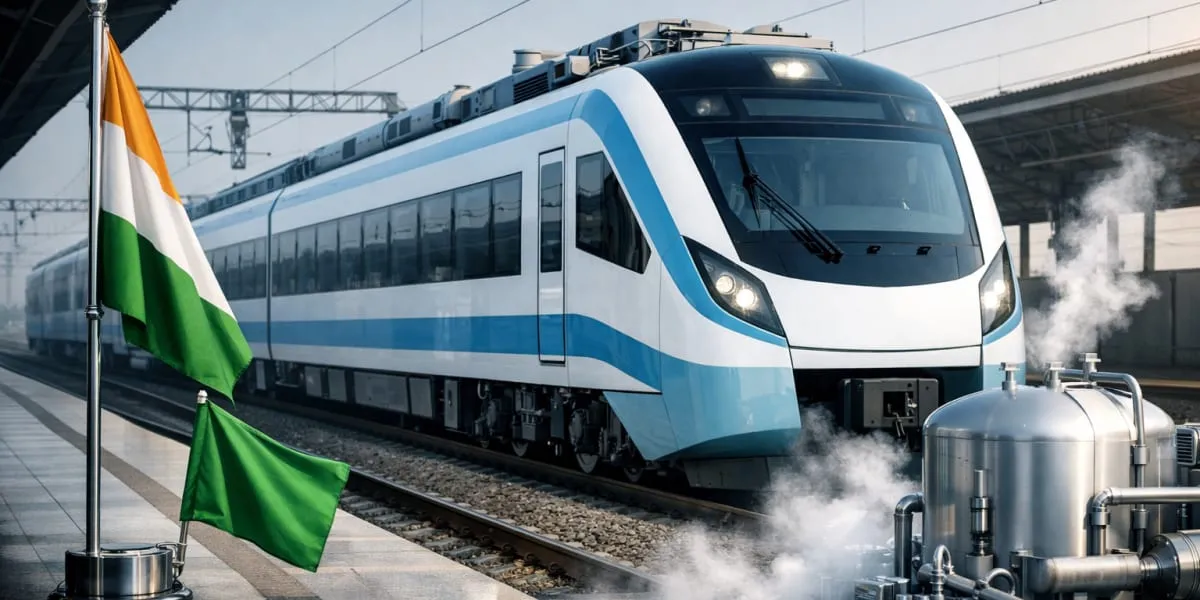
The trainset has been designed, engineered and integrated in India using indigenous technology and is powered by hydrogen fuel-cell systems that convert hydrogen into electricity, emitting only water vapour and producing zero carbon emissions in operation. Officials said the train eliminates tailpipe emissions, reduces reliance on fossil fuel imports and operates with lower noise. As electricity is generated onboard, the set does not require continuous overhead electrification, allowing operation on non-electrified routes.
The formation features a ten-coach configuration and a 3,200 HP propulsion system, making it among the longest and most powerful hydrogen passenger trainsets developed so far. Use of green hydrogen is expected to reduce dependence on electricity from fossil fuel-based thermal power plants and to support the country’s transition to sustainable transport. Officials described the launch as an important step for clean mobility in the railway sector.
At Jind the prime minister is due to launch development projects worth around Rs 147 billion (bn) and to open National Highway and urban works in Haryana estimated at several tens of billions of rupees including the 157.92 km Delhi-Amritsar-Katra Expressway. The expressway is expected to cut travel time between Delhi and Katra from 14 hours to nearly six hours and to reduce the Delhi to Amritsar journey from eight hours to four hours. Other works include the 33.81 km Ambala-Kala Amb Highway, the 40.60 km Jind-Gohana Greenfield Highway that will shorten Jind–Gohana travel from about two hours to 40 minutes, and the 24.27 km Hansi-Barwala upgrade, and the prime minister will also dedicate medical colleges and a Sikh museum in Kurukshetra to expand healthcare access and preserve cultural heritage.