
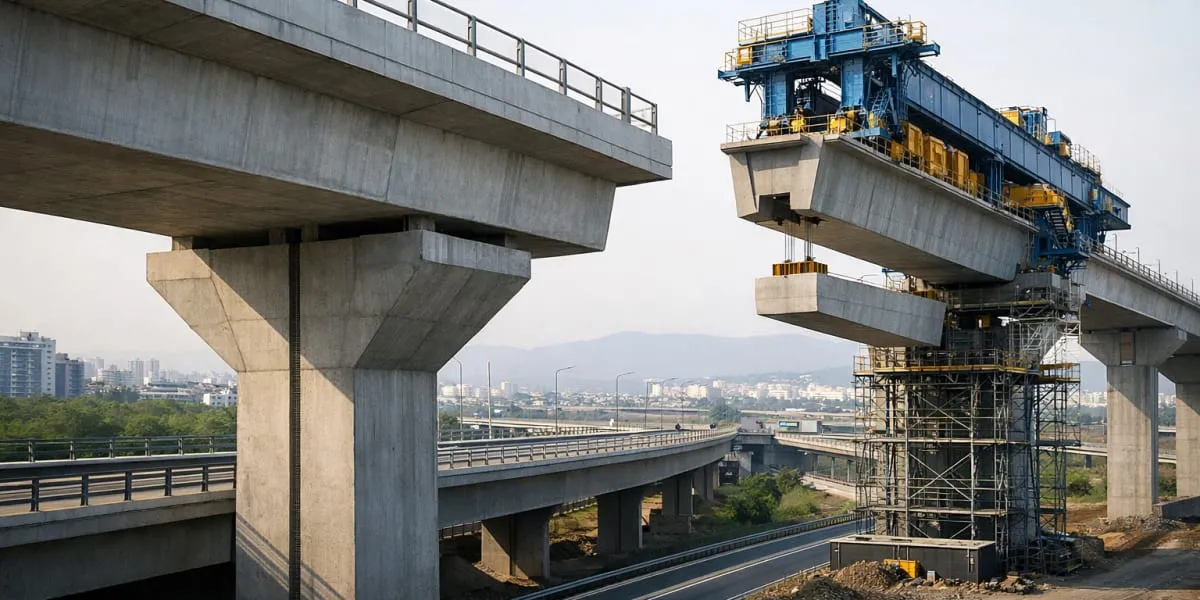
By increasing span lengths, the UHPFRC approach can reduce the number of ground-level pillars and thus minimise land requirements and obstructions beneath elevated sections. The longer-span design is expected to improve traffic movement under the structures and to reduce lifecycle maintenance demands compared with conventional elevated systems. Infrastructure specialists also note that such systems offer greater flexibility in densely built urban environments.
Officials have directed engineers to prioritise durable materials and tighter construction standards following concerns over structural components used in other projects, with the aim of improving long-term performance and lowering maintenance costs. The elevated corridors form part of a broader programme that includes additional highway upgrades, new expressway links and future connectivity measures intended to support industrial growth, freight movement and commuter mobility across western Maharashtra. Urban planners caution that expanding road capacity alone will not resolve the city's mobility challenges.
Sustainable strategies are therefore likely to combine efficient highways with public transport expansion, improved last-mile connectivity, intelligent traffic management and climate resilient infrastructure. Successful delivery will depend on timely land acquisition, coordinated project execution and strict adherence to engineering standards throughout construction. Authorities are expected to monitor progress closely to ensure that infrastructure investment delivers lasting mobility benefits and supports safer, more sustainable urban growth.