
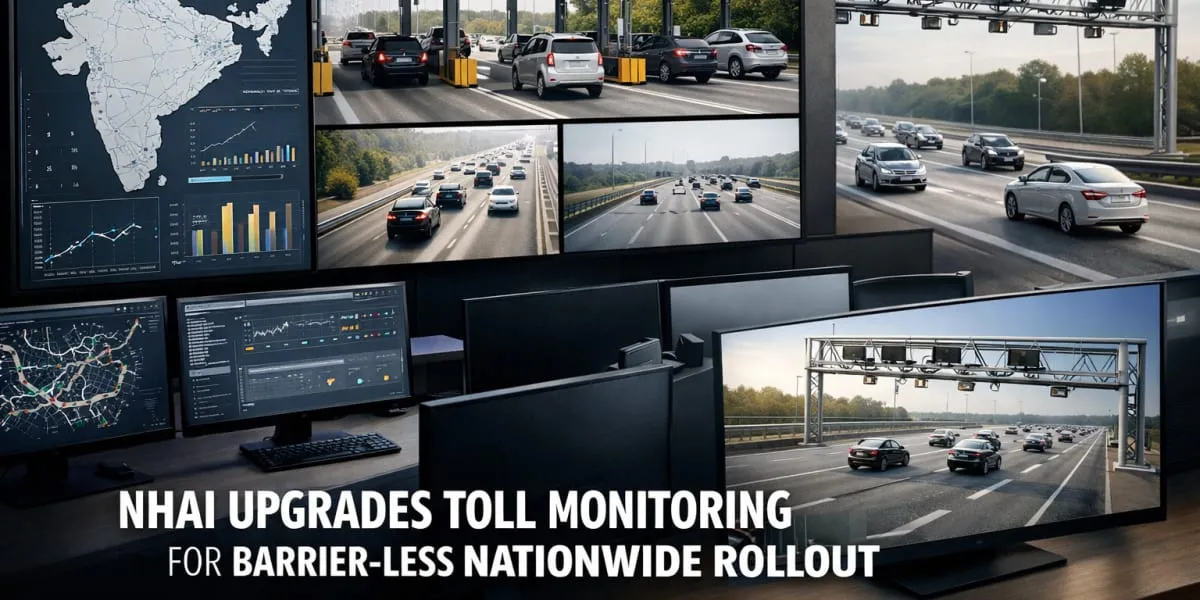
Multi-Lane Free Flow removes physical toll plazas and barriers, allowing vehicles to be charged while travelling at highway speeds through overhead gantries fitted with RFID readers and Automatic Number Plate Recognition cameras. MLFF is operational on a pilot basis at 17 locations and the first phase of expansion proposes introducing barrier-less tolling at 105 locations across several states. Officials said the upgraded command centre is intended to support the phased implementation and to manage the transition from plaza-based to barrier-less operations.
TMCC 2.0 will provide real-time monitoring of toll transactions, revenue collection, equipment performance, enforcement actions, financial reconciliation and service-level compliance across more than 1,200 toll plazas. A centralised automated reconciliation system will compare transaction logs generated at plazas with payment data from acquiring banks and the National Payments Corporation of India and will flag discrepancies in real time. For MLFF corridors the platform will reconcile vehicle detection records, toll computation, payment settlement and enforcement data to create an end-to-end audit trail for each journey.
The upgraded system will also function as a nationwide health-monitoring platform for tolling infrastructure, tracking RFID readers, cameras, lane controllers, communication links and MLFF gantry equipment through a central dashboard. This capability is designed to detect faults promptly, drive rapid remediation and improve system uptime while enabling automated enforcement and financial transparency. Officials said the more sophisticated technology backbone is necessary to handle high-volume, real-time data and to support automated enforcement at scale.