
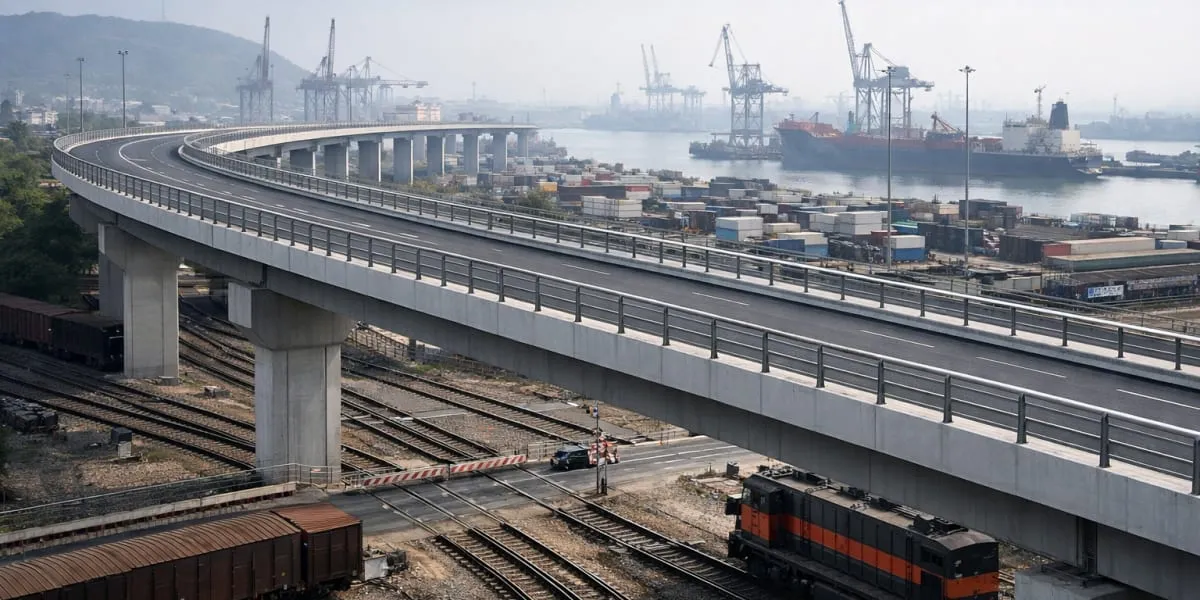
At present road traffic within the port must pass through nine railway level crossings, and gates are closed around 18 times a day because of train movements, forcing vehicles to wait before continuing to different sections. These repeated stoppages increase journey time and fuel consumption for cargo vehicles and complicate internal evacuation schedules. The elevated route aims to create a more direct link for heavy vehicles.
The proposed flyover will allow vehicles to bypass the railway crossings and reduce the need to halt at gates along the route. Separation of road and rail movements is expected to improve the flow of trains as well as road traffic in shared areas. For port operators, the upgrade should make internal cargo movement more predictable.
Fewer stoppages could translate into lower vehicle operating costs and better utilisation of the port road network, supporting faster turnaround for cargo evacuation. The corridor forms part of an internal connectivity upgrade intended to remove a major road–rail bottleneck within the port. Authorities have set the project timeline but have not provided a detailed schedule of construction phases.
Once completed the elevated link is expected to provide a faster connection between Convent Junction and the Dock Area and to reduce the impact of railway gate closures on cargo traffic. The approval by the ministry follows assessments of delay causes and internal transport needs at the port. Stakeholders will monitor progress as the scheme moves towards execution.