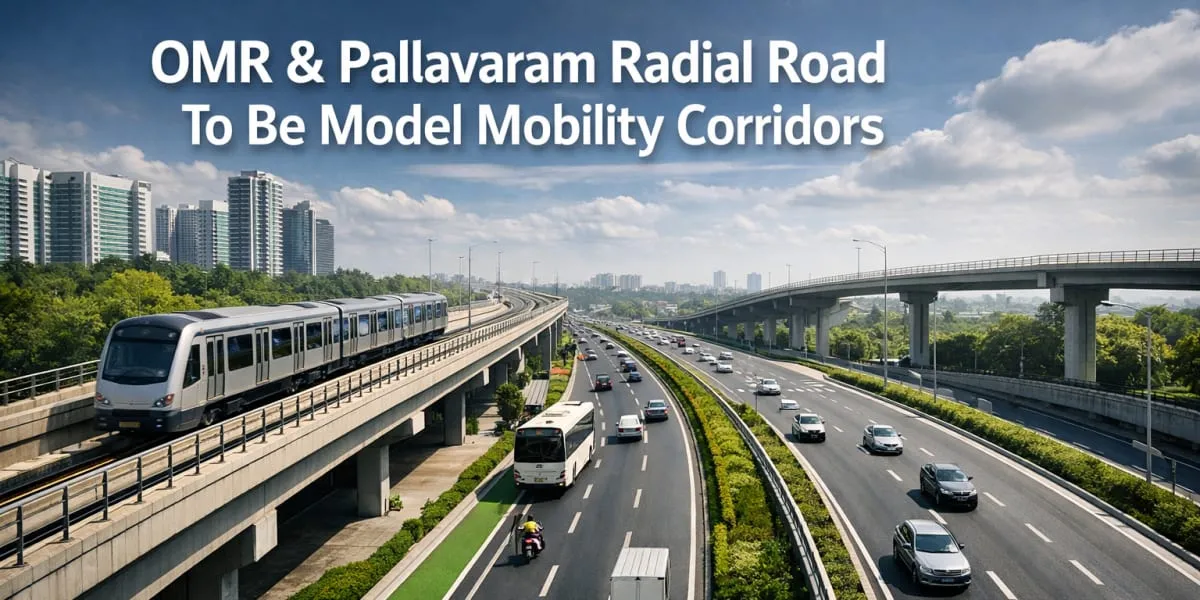
The detailed project report (DPR) will outline upgrades to public spaces and infrastructure, including areas under flyovers, grade separators and above subways, and roads integrated with parks, together with improvements to the road network around public transportation hubs. The plan will prioritise walking and cycling and seek to de-incentivise private vehicle use to reduce congestion and vehicle idling at intersections, according to a Cumta document. The aim is to reduce or maintain the status quo of annual per capita greenhouse gas (GHG) emissions through promotion of low carbon modes.
The corridor vision encompasses seamless traffic flow with clear priorities for non-motorised transportation (NMT) and public transportation, multimodal integration and measures for decongestion and comprehensive road safety. Proposals will include widening and strengthening of existing roads to achieve a uniform carriageway with a green median and dedicated service lanes, together with rehabilitation and widening of culverts and bridges and construction of grade separators. The report will also identify pedestrian facilities and safe intersections.
Design elements will provide designated bus bays and parking bays, improved access to railway stations, Mass Rapid Transit (MRT) stations and Metro stations, and measures to integrate bus terminals and stands with surrounding urban development. The DPR is expected to present a programme of phased interventions to enable implementation while minimising disruption to commuters and existing services. Cumta will use the DPR to guide subsequent detailed design and implementation planning.