
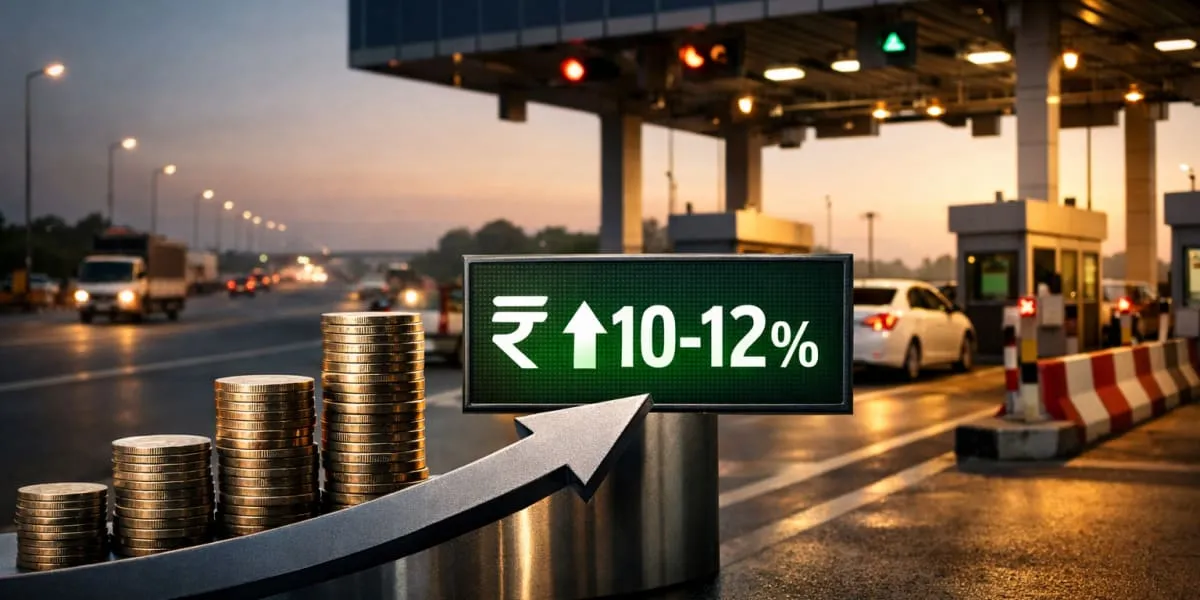
ICRA expects national highway traffic to expand by four to five per cent in 2026-27, down from six per cent in 2025-26, while toll rate growth is estimated at three point four to four per cent for the year. The report attributed part of the subdued rate growth to export-related traffic challenges and noted that traffic trends broadly track the gross value added (GVA) of construction, mining and manufacturing (CMM).
Suprio Banerjee, co-group head of corporate ratings at ICRA, said that CMM GVA rose eight point one per cent in 2025-26, which supported six per cent traffic growth on national highways and a ten per cent increase in toll collections that year. The report therefore links sectoral economic performance to roadway usage and revenue outcomes rather than treating toll growth as an isolated metric.
For 2027-28, ICRA projected higher toll revisions supported by a favourable movement in the Wholesale Price Index (WPI) amid geopolitical tensions in West Asia. It estimated WPI growth at eight to eight point five per cent in December 2026 and four point five to five point five per cent in March 2027, and said these dynamics would underpin tariff adjustments.
The report added that road construction execution by the Ministry of Road Transport and Highways (MoRTH) is likely to remain range-bound at 9,000-9,500 km in 2026-27 against 9,380 km in 2025-26, with road awards expected to rise to 8,000-8,500 km from around 7,000 km. It noted that engineering, procurement and construction (EPC) will remain the preferred awarding route while the government increases focus on build-operate-transfer (BOT) toll projects to revive private participation and that the revised BOT concession framework should reduce downside risk to concessionaires and lenders.