
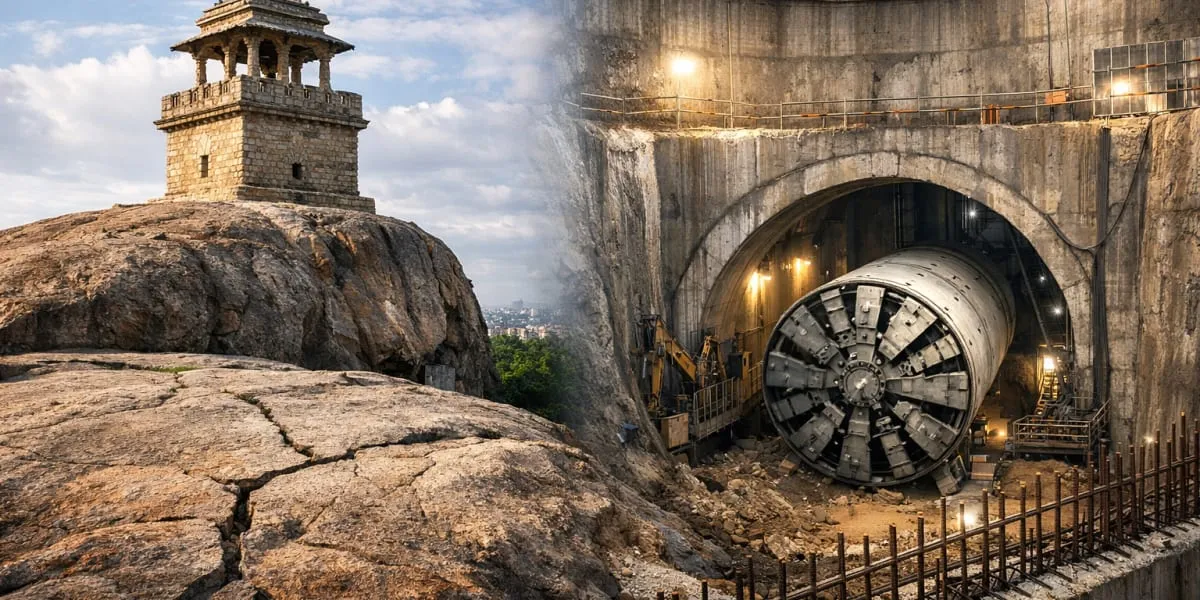
On page 18 the committee said the proximity of the historic Kempegowda watchtower on the crest of the monument amplifies the concern and that displacements of the rock could affect both the geotechnical and structural stability of the monument rock and heritage landmark. The watchtower is a four-century-old landmark with historical accounts dating it to 1537 while some sources place its construction in 1606, and Karnataka Tourism describes it as a 16th-century structure built by Kempegowda I. Any suggestion that a major road project could threaten a landmark bearing Kempegowda's name could prove politically sensitive for the state government and for Chief Minister D K Shivakumar, who has announced initiatives to honour the founder in the last three years.
The GSI stopped short of saying the tower will be damaged but raised concerns about risks posed by vibration, excavation, stress redistribution and possible fracturing, particularly because of the tower's location atop the monument. The committee recommended an independent technical review of the location of TBM Shaft four to maximise its setback from the protected monument before construction begins and called for additional geotechnical investigations, noting groundwater drawdown and construction vibration have implications for the stability of the National Geological Monument.
Historian Suresh Moona described the Kempegowda tower as a complex structure with a significant historical background linked to Bengaluru's culture and heritage, and he said the towers were built for security and are situated on elevated regions by highways, becoming an insignia of the Bengaluru City Corporation. Authorities will need to balance infrastructure development with conservation and ensure reviews and studies are completed before tunnelling proceeds to mitigate the identified risks.