
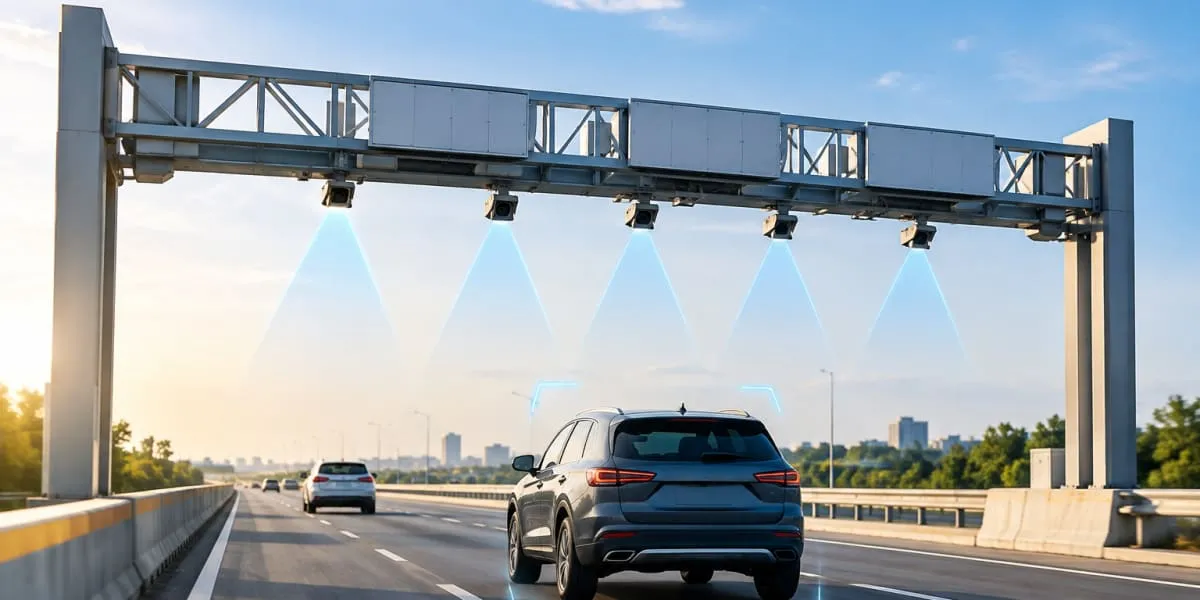
MLFF tolling uses overhead gantries to identify vehicles and collect charges electronically as they travel at normal speeds. Gadkari said the government aims to eliminate stoppages, reducing fuel consumption and the operational costs associated with toll plazas. He has directed officials to complete most of the work by December 2026.
Gadkari said the operating cost of toll plazas currently ranges between 12 per cent and 15 per cent. This is expected to fall to between 2 per cent and 4 per cent after the barrier-free model is implemented nationwide, generating annual savings of Rs. 60 to 70 bn.
The minister said India’s electronic toll collection system, FASTag, had already reduced waiting times and removed the need for cash payments at toll plazas. Waiting time, which was previously about 12 minutes and reached 30 minutes at some locations, has improved by 80 per cent to 90 per cent, though Gadkari said further reductions were needed.
Reduced waiting times are estimated to save about 710 mn hours and 560 mn litres of fuel annually, with fuel savings valued at approximately Rs. 52.5 bn. The economic value of commuters’ saved time is estimated at Rs. 685 bn a year. Gadkari also said wider FASTag adoption and digital tolling had generated an estimated annual benefit of Rs. 200 to 250 bn for the government.