
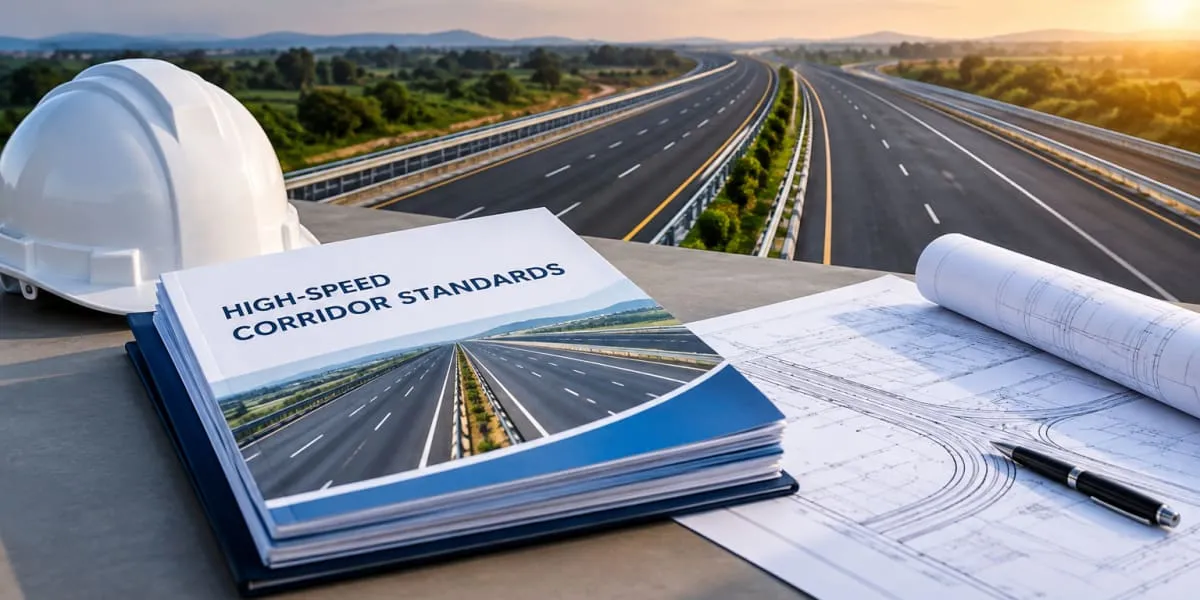
The move comes as India targets 50,000 km of high-speed corridors by 2036-37 under Vision 2047. The network totalled 3,052 km at the end of December 2025. NHAI has directed that traffic assessments account for existing, generated, induced and diverted traffic, supported by traffic modelling and validation from sources such as toll transactions, GST portals and mining departments.
Under the new lane norms, corridors with traffic of up to 15,000 passenger car units (PCU) should have a 4-lane highway and a 4-lane structure. Traffic between 15,000 and 25,000 PCU will require a 4-lane highway with a 6-lane structure, while corridors carrying 25,000 to 40,000 PCU should have both a 6-lane highway and a 6-lane structure.
The authority has specified that access must be designed to preserve uninterrupted movement on the main highway, with no at-grade road intersections. Access will be provided through properly designed ramps. In areas with frequent movement of harvesters and tractors carrying heavy farm produce, underpasses may be designed with a height of 4.5 m. Service roads are required on both sides in built-up and urban areas, along with drains and footpaths.
Full overhead gantries carrying direction signs must be installed 5 km and 2 km before an exit, while cantilever gantries must be placed 1 km and 500 m ahead. Lane markings must be 150 mm wide and edge markings 200 mm wide. Layouts must also accommodate multi-lane free flow tolling, while a 1 m reinforced cement concrete boundary wall will protect the right of way from encroachment and unauthorised access. Drip irrigation in medians and tree planting must be incorporated at the project-report stage.