
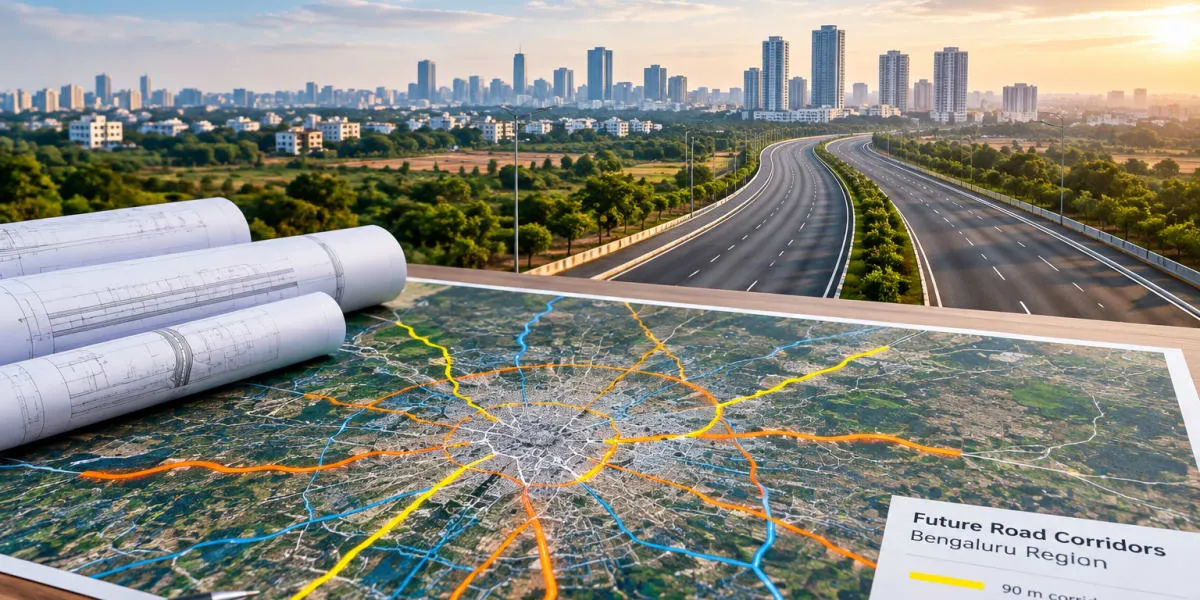
Urban development minister Krishna Byre Gowda said the identified corridors have proposed widths of 30 metres, 45 metres and 90 metres. The roads will not be built immediately, with some projects planned over five, eight or 10 years. The reservation is intended to prevent new construction from blocking future alignments.
Gowda said the government’s approach was based on the experience of Bengaluru’s earlier expansion, when 110 villages and seven City Municipal Councils were brought into the city about two decades ago without adequate infrastructure planning. As those areas developed, existing construction left insufficient space to create or widen roads.
The Bengaluru Metropolitan Region Development Authority, Zilla Panchayat, Public Works Department and local planning authorities are working on the proposed road grid. They have been asked to physically mark the corridors and identify stretches for priority development. The network is intended to connect taluk and hobli headquarters, major district roads and state highways with larger routes such as the Peripheral Ring Road and Satellite Town Ring Road.
The city currently covers about 750 sq km, while nearly 1,200 sq km around it has acquired an urban character. Citing expert assessments, Gowda said this area could reach about 1,400 sq km and eventually 1,800 sq km. Satellite imagery was used to identify alignments, with officials seeking to avoid existing settlements; about 90 to 95 per cent of the marked stretches pass through open or greenfield areas.
The reservation does not constitute immediate land acquisition. Landowners can continue agricultural activity and sell their property, but new construction will not be permitted within notified corridors. Properties that already have approvals will retain their existing rights, while the wider network will be developed in phases.