
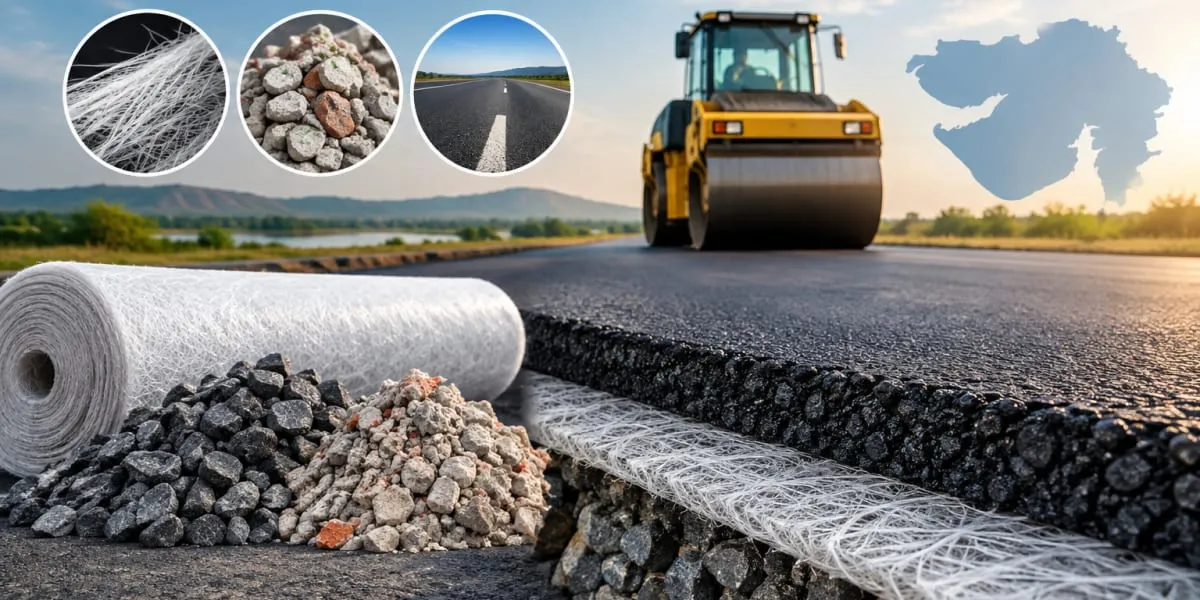
A key method included in the programme is Stress Absorbing Membrane Interlayer (SAMI), a fibre mat placed beneath the asphalt. The material is intended to absorb stresses caused by vehicle movement, temperature variation and moisture, thereby reducing the risk of premature surface deterioration and limiting the spread of cracks through the pavement.
The construction process will also reuse materials recovered from existing roads. Old pavement will be excavated, treated with lime and stabilised through pulverising and rolling before the material is spread and compacted. Cement application and chemical stabilisation will follow, with the surface levelled and compacted before the next construction stage.
After a seven-day period, the SAMI fibre sheet will be laid before asphalt application. The programme includes road widening, resurfacing, four-laning, protection works, side shoulders, rumble strips and drainage improvements. White topping and glass grid technology are also included, depending on the requirements of individual road sections.
The projects are located in districts including Patan, Gir Somnath, Mahisagar, Bharuch, Morbi, Surendranagar, Surat, Vadodara, Chhota Udepur, Anand, Mehsana, Kutch, Bhavnagar, Jamnagar and Narmada. Identified stretches include the Lanwa-Manund-Sander-Balisana Road, Radhanpur-Mashali-Madhapura Road, Bhidiya Somnath Road, Dindoli-Karadwa-Iklera Road, Surendranagar Bypass Road, Manglej-Nareshwar Road and Talaja-Gopnath Road.
Other construction methods being considered include waste plastics in asphalt, fly ash, cement stabilisation, cold mix asphalt and geogrids. Fibreglass glass grids can help distribute traffic loading across pavement layers, while the reuse of existing materials can reduce demand for fresh resources. The performance of these approaches will depend on material quality, road-base preparation and construction practices over the roads’ operating life.