
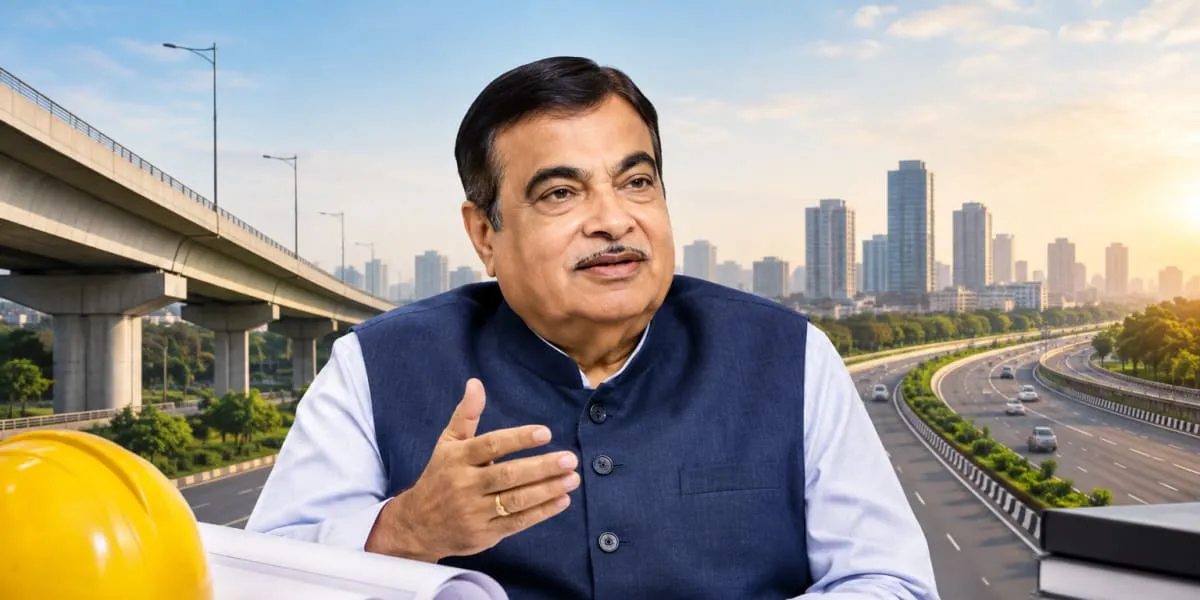
Gadkari highlighted the need to draw lessons from India’s experience in developing national highways and apply them to city roads. He also stressed integrated planning among road, metro and rail agencies to improve the use of limited urban land and public resources, while noting that stronger everyday mobility within cities was essential alongside improved intercity connectivity.
The two-day event was held on November 3 and 4 at the National Council of Applied Economic Research campus in New Delhi. Jointly organised by Jana Urban Space Foundation, Janaagraha and NCAER, it brought together policymakers, government officials and urban practitioners to discuss reforms in the design, financing, construction and maintenance of urban roads.
Discussions at the event supported a national mission on urban roads focused on safer, more accessible and people-centred streets. Participants called for stronger institutions, common design standards, quality-focused procurement and clear accountability for construction and maintenance, along with improved technical capacity and coordination among agencies.
NCAER Director General Suresh Goyal said urban roads had received less attention than national highways and rural roads despite their importance to economic activity, safety, sustainability and quality of life. Srikanth Viswanathan, Executive Director of Jana Urban Space Foundation and CEO of Janaagraha, supported a coordinated national approach involving funding and action for urban roads.
The event highlighted Bengaluru’s Tender S.U.R.E. initiative and Uttar Pradesh’s Chief Minister Green Road Infrastructure Development Scheme as development models. The latter is covering over 290 kilometres of urban roads across 17 cities. Participants also stressed sustainable financing for construction and long-term maintenance, greater municipal revenue generation and stronger institutional accountability.