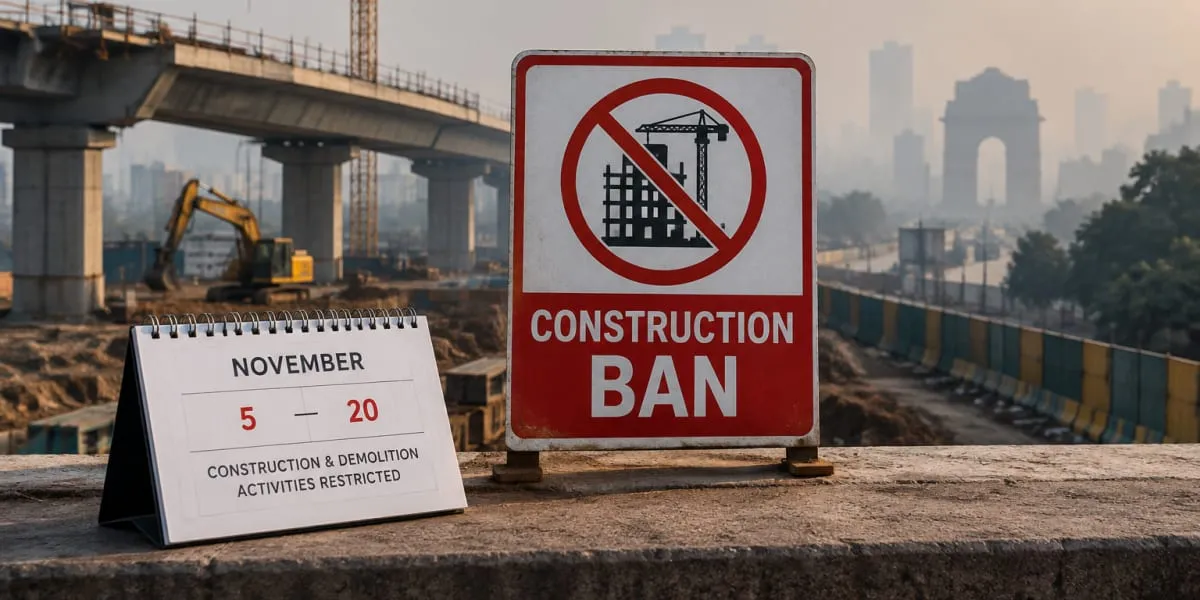
The restriction covers construction and demolition activities that generate dust and pollution. It does not apply to every development activity, with hospitals and certain nationally important projects exempted. Metro, railway, airport, interstate bus terminal, water-supply and sanitation projects are among the categories listed for exemption under the reported order.
The immediate impact is expected to be felt by road, flyover and underpass projects being implemented by the PWD in Delhi. The department is also carrying out road repairs and laying new road surfaces, with a target of completing the work by November 30. Some of these projects had already started before the pollution-control restriction was imposed.
The interruption follows a difficult construction cycle for Delhi’s road infrastructure. Road projects were affected earlier in the year by higher bitumen prices linked to the conflict in West Asia, while the monsoon later halted or slowed activity for an extended period. With the rains over, the PWD had planned to accelerate road construction and repair work, but the pollution-related restriction has created another pause.
The order highlights the recurring challenge of maintaining infrastructure while limiting activities that worsen air quality. Exposed soil, debris, material handling and vehicle movement can add dust during periods of severe pollution, prompting authorities to distinguish between dust-generating work and projects considered essential to transport, utilities, sanitation or public services.
For residents, delayed road and flyover works could prolong diversions, bottlenecks and incomplete infrastructure. The report does not provide project-wise revised completion dates or details on how contractors will secure sites during the stoppage. If the restriction is extended after November 20, the PWD’s November 30 target could be affected and large-scale road construction may move towards the end of February, increasing the risk of longer timelines.